
Russia begins clinical use of cell-based technology for eardrum repair
By ANI | Updated: January 11, 2026 17:30 IST2026-01-11T22:58:54+5:302026-01-11T17:30:05+5:30


Moscow [Russia], January 11 : The Clinical Centre of IM Sechenov First Moscow State Medical University, commonly known as ...
Russia begins clinical use of cell-based technology for eardrum repair
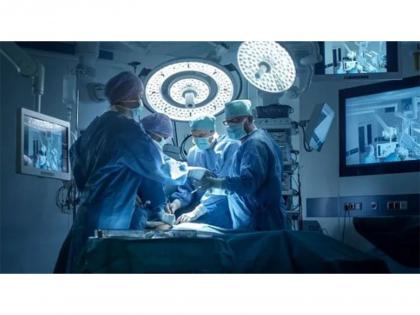
Moscow [Russia], January 11 : The Clinical Centre of IM Sechenov First Moscow State Medical University, commonly known as Sechenov University, has begun performing innovative eardrum repair procedures using tissue equivalents created from patients' own cells.
According to the university's official portal, this is the world's first reported clinical application of a cell-based medicinal product (CBMP) for the regeneration of the tympanic membrane.
The breakthrough marks a significant milestone in regenerative medicine.
Sechenov University Rector Petr Glybochko said the institution is the only medical university in Russia to have completed the entire translational pathway, from fundamental research to certified production of a cell product and its clinical use within its own medical facility, as reported by TV BRICS.
The research is being conducted under state programmes supporting science and education.
The technology involves extracting cells from a patient's adipose tissue and forming them into cell spheroids. These spheroids are implanted along with a resorbable membrane at the site of the damaged eardrum. Over time, the membrane dissolves and is replaced by the patient's own regenerated tissue, which closely matches the structure and function of a natural eardrum.
Clinical data show that the procedure takes approximately 40 minutes, making it significantly faster than conventional tympanoplasty.
Early results have been encouraging, with the first patients experiencing favourable post-operative recovery and no reported complications.
Medical experts note that tympanic membrane perforation affects four to five people per 1,000, often resulting from infections, physical trauma, or sudden changes in pressure.
Existing surgical techniques are complex and do not always produce stable outcomes, with graft failure rates ranging between 10 and 20 per cent.
Researchers at Sechenov University said the new development covers the entire innovation cycle, from cell isolation to clinical application, enabling a shift from experimental research to practical medicine.
They added that the platform technology could later be adapted for the regeneration of other organs and tissues, significantly expanding the future potential of cell-based therapies.
Disclaimer: This post has been auto-published from an agency feed without any modifications to the text and has not been reviewed by an editor
Open in app