
South Korea reports three new bird flu cases at poultry farms
By IANS | Updated: December 24, 2025 20:30 IST2025-12-24T20:25:33+5:302025-12-24T20:30:28+5:30


Seoul, Dec 24 South Korea reported new cases of highly pathogenic avian influenza at three poultry farms Wednesday, ...
South Korea reports three new bird flu cases at poultry farms
Seoul, Dec 24 South Korea reported new cases of highly pathogenic avian influenza at three poultry farms Wednesday, bringing the total number of cases this season to 21.
The cases were found at a chicken farm in Anseong, about 65 kilometres south of Seoul, a duck farm in the southwestern county of Gochang and another duck farm in the southwestern city of Naju, according to the Central Disaster Management Headquarters, Yonhap news agency reported.
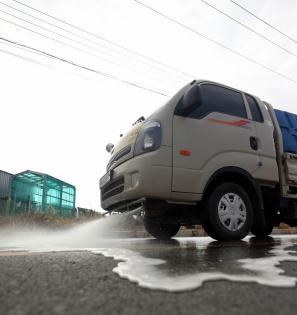
Authorities have restricted entry to the farms, and begun culling animals and investigating the outbreaks. They have also ordered a temporary standstill order on farms and farming vehicles in the affected areas.
Inspections will take place at duck farms affiliated with the two affected duck farms as well as all duck farms in North Jeolla Province, where Gochang is located.
Agriculture ministry officials will also be dispatched to Anseong and the western city of Cheonan, where there is a high possibility of additional cases.
Meanwhile, Japan's agriculture ministry also said Wednesday that genetic testing has confirmed an outbreak of highly pathogenic avian influenza at a farm in Kyoto Prefecture, marking the ninth bird flu outbreak in the country this season.
According to a statement released by the Ministry of Agriculture, Forestry and Fisheries, the outbreak occurred at a poultry farm in Kameoka City, Kyoto Prefecture, which raises approximately 280,000 egg-laying chickens.
Local authorities received a report on Tuesday and conducted a rapid avian influenza test on the farm's chickens the same day, with the results coming back positive. Genetic testing carried out on Wednesday confirmed infection with the highly pathogenic avian influenza virus.
In accordance with relevant guidelines, all chickens at the farm will be culled, incinerated and buried. Additionally, farms within a 3-kilometre radius are banned from moving chickens and eggs, while others located within a radius of three to 10 kilometres cannot transport poultry products outside the area.
Disinfection efforts around the farm have been strengthened to prevent further spread of the virus, and an epidemiological investigation team has been dispatched, with experts from the ministry to be sent if necessary, according to the statement, Xinhua news agency reported.
Japan's avian influenza season typically runs from autumn until the following spring. The previous eight outbreaks this season have already led to the culling of nearly 2.4 million chickens. The country's first case was confirmed in the northernmost prefecture of Hokkaido on October 22.
Avian influenza, also known as bird flu, is a type of zoonotic (or animal) influenza that affects wild birds and poultry and is caused by virus sub-types A(H5N1), A(H9N2). Avian influenza has occasionally infected humans; however it does not easily transmit between humans. The majority of human cases of avian influenza have been associated with direct or indirect contact with infected live or dead poultry.
Disclaimer: This post has been auto-published from an agency feed without any modifications to the text and has not been reviewed by an editor
Open in app