
US-Iran talks inconclusive but progress seen on key issues, says foreign affairs expert Waiel Awwad
By ANI | Updated: April 15, 2026 08:20 IST2026-04-15T13:47:58+5:302026-04-15T08:20:12+5:30



New Delhi [India], April 15 : Amid ongoing geopolitical tensions in West Asia and renewed diplomatic efforts between the ...
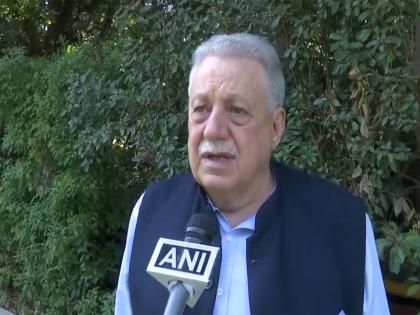
US-Iran talks inconclusive but progress seen on key issues, says foreign affairs expert Waiel Awwad
New Delhi [India], April 15 : Amid ongoing geopolitical tensions in West Asia and renewed diplomatic efforts between the United States and Iran, foreign expert Waiel Awwad has described the latest round of negotiations as inconclusive but not unsuccessful, suggesting that both sides may still be moving towards a possible understanding on critical security and strategic issues.
Speaking withon the evolving situation surrounding West Asia conflict dynamics and US-Iran peace negotiations, Awwad underlined that while the discussions did not result in a final breakthrough, there remains space for diplomatic convergence on major points of contention that continue to shape regional stability and global energy security.
He said, "The talk did not fail. It was inconclusive... I think now both sides are in a mood to implement a deal and reach an agreement on the two issues of prime importance. One is that Iran will not be attacked again, and the Strait of Hormuz will not be closed. The problem with the US President is that he always contradicts himself, even though America does not import oil from the Strait of Hormuz, yet he put the whole world at stake. The whole world is at the mercy of the United States because of the global crisis it created in the Strait of Hormuz."
The Strait of Hormuz, a narrow maritime passage linking the Persian Gulf with the Arabian Sea, remains one of the most strategically significant chokepoints for global crude oil transportation. Any disruption in the region has historically triggered volatility in international energy markets, impacting both oil-importing and oil-exporting economies across continents.
The central issues in the US-Iran engagement revolve around regional security guarantees, sanctions relief mechanisms, and assurances against escalation that could further destabilise West Asia. While formal details of the negotiations remain limited, the tone from various stakeholders indicates cautious optimism despite deep-rooted mistrust.
Awwad's remarks also highlight the broader geopolitical stakes involved, particularly the role of major global powers in shaping outcomes that extend far beyond the immediate region. The mention of the Strait of Hormuz underscores how regional conflicts can rapidly escalate into global economic concerns, affecting supply chains, inflation trends, and energy prices worldwide.
While uncertainty continues to surround the next steps in the negotiations, any future framework will likely depend on mutual assurances regarding military restraint and maritime security in the Gulf region.
Disclaimer: This post has been auto-published from an agency feed without any modifications to the text and has not been reviewed by an editor
Open in app