
'Use 'East Turkistan,' not 'Xinjiang,' says Uyghur leader, calls China's actions colonial genocide
By ANI | Updated: December 23, 2025 18:50 IST2025-12-23T18:46:31+5:302025-12-23T18:50:05+5:30


Washington DC [US], December 23 : Salih Hudayar, Foreign and Security Minister of the East Turkistan Government in Exile ...
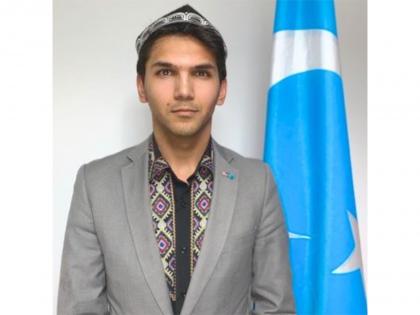
'Use 'East Turkistan,' not 'Xinjiang,' says Uyghur leader, calls China's actions colonial genocide
Washington DC [US], December 23 : Salih Hudayar, Foreign and Security Minister of the East Turkistan Government in Exile (ETGE), has welcomed Genocide Watch's recent alert titled "Genocide Emergency: Xinjiang, China 2025," while cautioning that certain terminology and framing used in the report risk reinforcing Beijing's narrative, as noted in his post on X.
According to Hudayar, the use of the term "Xinjiang" without context obscures the historical and political reality of what he described as China's military occupation of East Turkistan.
He stressed that "Xinjiang," meaning "new territory," is a colonial name imposed unilaterally by Beijing and erases East Turkistan's history as an independent country, which he said lies at the root of the ongoing genocide.
Hudayar further challenged population figures referenced in international reporting. As cited in his post, he stated that East Turkistan is home to far more people than the commonly cited figure of 12 million. He pointed out that even Chinese government data places the region's total population at approximately 26 million, while listing around 12 million Uyghurs, figures he described as political undercounts.
East Turkistani scholars and sources, he added, estimate that the Uyghur and broader Turkic population may have been closer to 45 million when China intensified its policies in 2014.
Rejecting descriptions that frame the situation as an internal issue "inside China," Hudayar asserted that acts of genocide are being carried out in an occupied country. He stated that mass detention, forced labour, birth prevention, child transfers, religious and linguistic erasure, and demographic engineering are being used as tools of foreign occupation and colonisation to secure permanent Chinese control over East Turkistan.
In his statement, Hudayar urged human rights organisations and governments to adopt more accurate language and analysis. He called for the consistent use of "East Turkistan" instead of "Xinjiang," or, where unavoidable, the phrasing "East Turkistan (what China calls 'Xinjiang')," alongside explicit acknowledgement of occupation and colonial domination.
He also appealed for population figures to reflect both East Turkistani estimates and Beijing's own higher numbers, warning that lower figures unintentionally minimise the scale of the genocide. Additionally, Hudayar emphasised that lasting solutions require external self-determination, decolonisation, and the restoration of East Turkistan's independence, rather than reforms under continued Chinese rule.
"Naming genocide is vital," Hudayar said, according to his post, adding that naming the country, the people, and the root cause, Chinese occupation and colonisation, is equally essential to preventing what he described as the completion of the genocide.
Disclaimer: This post has been auto-published from an agency feed without any modifications to the text and has not been reviewed by an editor
Open in app