
Mumbai: Devendra Fadnavis Highlights Women’s 50% Role in Nation Building at Nari Shakti Event
By Lokmat Times Desk | Updated: April 16, 2026 11:10 IST2026-04-16T11:07:11+5:302026-04-16T11:10:00+5:30



Maharashtra Chief Minister Devendra Fadnavis on Wednesday addressed a gathering in Mumbai where he praised the ‘Nari Shakti Vandan’ ...
Mumbai: Devendra Fadnavis Highlights Women’s 50% Role in Nation Building at Nari Shakti Event
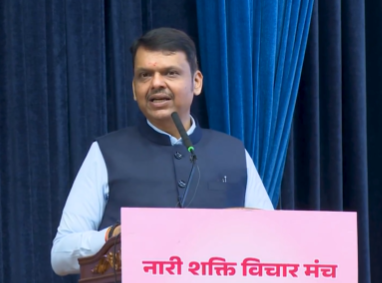
Maharashtra Chief Minister Devendra Fadnavis on Wednesday addressed a gathering in Mumbai where he praised the ‘Nari Shakti Vandan’ initiative, stressing its importance in shaping India’s future. He stated that the country cannot attain developed nation status unless women contribute equally, accounting for at least 50 per cent participation in national progress. Emphasising balanced growth, he said both men and women must work together across sectors. According to him, inclusive development is only possible when women are empowered socially, economically, and politically, ensuring they have equal opportunities to lead and influence decision-making processes nationwide.
Speaking at the ‘Nari Shakti Vandan’ Women’s Conference organised by the Nari Shakti Vichar Manch, Fadnavis said the recently approved women’s reservation framework demonstrates strong political determination under Prime Minister Narendra Modi. He highlighted that this reform will significantly improve women’s representation in Parliament as well as in state legislatures. According to him, the increased participation of women in governance will bring meaningful political, social, and economic transformation. He added that empowering women through structured representation would strengthen democracy and ensure more inclusive policymaking that reflects diverse perspectives from across the country.
A day after Prime Minister Modi addressed a similar gathering on the initiative, Fadnavis reiterated its long-term impact and noted that the number of women Members of Parliament could rise from the current 73 to nearly 273 by 2029. He described this potential growth as a major milestone for inclusive governance in India. Calling the initiative a “historic step,” he urged citizens to extend their full support. According to him, collective backing from society is essential to ensure the success of this reform and to promote gender equality across all levels of governance and public life.
The Chief Minister also referred to earlier efforts to pass the Women’s Reservation Bill, recalling attempts made during the tenure of former Prime Minister Atal Bihari Vajpayee. He pointed out that those attempts could not succeed due to a lack of political consensus at the time. In contrast, he credited the current progress to decisive leadership at the Centre, which ensured the passage of the framework. He remarked that strong and unified political will has been crucial in overcoming previous obstacles and advancing a reform that had remained pending for several years.
Also Read: "Delimitation Bill dressed as Women's Reservation Bill...": Congress MP Manish Tewari
Addressing concerns related to the census and delimitation process, Fadnavis clarified that the reservation framework is based on data from the 2011 Census. He explained that the 2021 Census was delayed due to the COVID-19 pandemic, which affected nationwide administrative processes. He assured that the delimitation exercise would begin soon. The event was attended by several prominent figures, including Maharashtra Women and Child Development Minister Aditi Tatkare, along with MLAs and other dignitaries. Celebrities such as Raveena Tandon and Prajakta Mali were also present.
Highlighting Maharashtra’s progress in women’s empowerment, Fadnavis said the state has witnessed significant achievements in ensuring female representation in leadership roles. He noted that women now occupy several top administrative positions, including key roles in governance and law enforcement. He also pointed out that women’s participation in local self-governing bodies has reached 55 per cent, reflecting a strong shift towards inclusivity. According to him, these developments demonstrate Maharashtra’s commitment to advancing gender equality and providing women with opportunities to lead and contribute meaningfully in various sectors.
While acknowledging past challenges such as the ‘Sarpanch-Pati’ practice, Fadnavis said the situation has improved considerably, with women now being elected based on merit and performing effectively in leadership roles. He also highlighted academic achievements, citing an event in Nagpur where female students secured six out of eight gold medals at AIIMS. During the programme, women achievers from different fields were honoured. In a symbolic show of support, Fadnavis and other dignitaries gave a missed call to a designated number and signed a commemorative plaque, reaffirming their commitment to promoting women’s leadership in India.
Open in app