
Mumbai: Sharp Fall in BEST’s Own Buses Sparks Debate in Maharashtra Legislative Assembly
By Lokmat Times Desk | Updated: February 26, 2026 16:56 IST2026-02-26T16:56:47+5:302026-02-26T16:56:47+5:30



Concerns regarding the sharp reduction in the number of buses owned by the Brihanmumbai Electric Supply and Transport (BEST) ...
Mumbai: Sharp Fall in BEST’s Own Buses Sparks Debate in Maharashtra Legislative Assembly
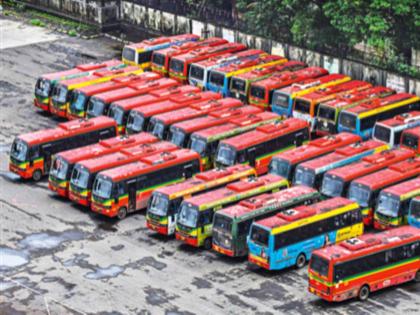
Concerns regarding the sharp reduction in the number of buses owned by the Brihanmumbai Electric Supply and Transport (BEST) undertaking were brought up in the Maharashtra Legislative Assembly on Thursday during the ongoing Budget Session. Several members questioned whether Mumbai’s public transport network can remain viable amid the falling fleet strength. The starred question was jointly submitted by MLAs Parag Alavani, Ameet Satam, Rajan Naik, Captain R. Selvan, Parag Shah, Aslam Shaikh, Vijay Wadettiwar, Amin Patel, Jyoti Gaikwad, Nana Patole, Vishwajeet Kadam, Sanjay Meshram, and Vikas Thakre, seeking a detailed response from Deputy Chief Minister Eknath Shinde.
The legislators pointed out that by January 2026, only 249 BEST-owned buses remain operational, a number they described as alarmingly low for a metropolis like Mumbai. They noted that this represents a dramatic drop compared to nearly 1,100 buses in April 2024 and 757 buses in April 2025. Raising serious concerns about the city’s transport backbone, members stressed that BEST has historically served as Mumbai’s lifeline. They questioned how such a steep decline within a short span could affect daily commuters and pressed the government to clarify the reasons behind the continuous reduction in the undertaking’s own fleet.
In his response, Shinde acknowledged the figures presented in the House and explained that the primary reason for the shrinking fleet is the phased scrapping of buses that have completed their mandated operational life of 15 years, in accordance with BEST regulations. He said that vehicles exceeding the prescribed age are systematically withdrawn from service to comply with safety and operational norms. The Deputy Chief Minister maintained that this process is routine and governed by existing rules, implying that the reduction is linked to policy compliance rather than any abrupt administrative decision.
MLAs further argued that Mumbai’s expanding population and increasing commuter load demand a fleet strength of at least 10,000 to 15,000 buses to ensure smooth public transport services. In contrast, they observed that the existing arrangement is becoming heavily dependent on hired buses. Members voiced apprehension about the upkeep and reliability of these contracted vehicles, suggesting that over-reliance on rentals could compromise service quality. They sought assurances from the government that maintenance standards and operational efficiency would not suffer as the share of privately hired buses grows.
Addressing these concerns, Shinde informed the Assembly that BEST has executed agreements to induct 6,555 buses on a rental basis, out of which 2,518 have already been deployed for public service. He assured legislators that all hired buses are subjected to regular technical checks to maintain safety and performance standards. The Deputy Chief Minister added that strict penalties are imposed on contractors in cases of maintenance lapses or non-compliance. He emphasized that the administration is closely monitoring operations to ensure uninterrupted and dependable transport services for Mumbai’s commuters.
On the issue of augmenting the fleet, Shinde said that concrete measures are being implemented to increase bus availability. He stated that the revised estimates for the 2025–26 budget include provisions to procure 3,088 buses through the transport department. This planned addition comprises 2,542 single-decker buses, 426 midi buses, and 120 air-conditioned double-decker electric buses. Besides this, BEST is in the process of hiring 1,500 air-conditioned midi buses under the Central Government’s PM E-Drive scheme, aimed at promoting electric mobility and strengthening urban transport infrastructure.
The Deputy Chief Minister also assured the House that regular servicing and technical inspections of the existing BEST fleet are being carried out systematically. Responding to apprehensions about potential service disruptions or delays due to the shrinking number of owned buses, he dismissed such concerns, stating that the “question does not arise.” Shinde reiterated that the government remains committed to maintaining adequate bus services across the city and is taking necessary administrative and financial steps to ensure that Mumbai’s public transport network continues to function efficiently despite the transitional phase in fleet composition.
Open in app