
Mumbai Weather Update: AQI Crosses 190 Despite Clear Skies, PM2.5 Spike Raises Health Concerns Across the City
By Lokmat Times Desk | Updated: January 11, 2026 09:36 IST2026-01-11T09:36:13+5:302026-01-11T09:36:13+5:30



Mumbai residents began Sunday with deteriorating air conditions as pollution levels surged beyond acceptable limits, placing the city in ...
Mumbai Weather Update: AQI Crosses 190 Despite Clear Skies, PM2.5 Spike Raises Health Concerns Across the City
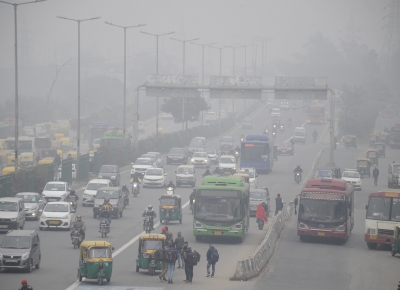
Mumbai residents began Sunday with deteriorating air conditions as pollution levels surged beyond acceptable limits, placing the city in the unhealthy category, as shown by real-time air quality monitoring systems. The decline in air quality was observed despite clear skies and relatively mild winter temperatures, surprising many residents. Health experts expressed concern over the sudden spike, warning that visual clarity does not always indicate clean air. The situation triggered anxiety among citizens, especially those vulnerable to pollution-related illnesses, as the city continues to grapple with recurring air quality issues during the winter season, raising questions about long-term environmental and public health preparedness.
Early morning readings revealed a sharp rise in pollution levels across Mumbai. At 8.54 am on January 11, the city recorded an Air Quality Index of 191 under the US AQI system, classifying the air as unhealthy. Fine particulate matter was identified as the primary pollutant, with PM2.5 concentrations reaching 111 micrograms per cubic metre, exceeding safe limits by more than four times. PM10 levels were also significantly high at 137 micrograms per cubic metre, pointing to excessive dust and airborne particles circulating throughout the city’s atmosphere during the early hours.
Although gases such as carbon monoxide, sulphur dioxide, nitrogen dioxide and ozone remained within permissible thresholds, experts cautioned that elevated particulate matter alone can pose serious health risks. Continuous exposure to PM2.5 and PM10 particles can penetrate deep into the lungs and bloodstream, potentially aggravating respiratory and cardiovascular conditions. Specialists noted that even when other pollutants remain controlled, sustained high levels of fine dust can lead to long-term health complications, making it essential for authorities and residents to treat the situation with urgency despite the absence of toxic gas spikes.
Weather conditions offered little relief from the pollution build-up. Morning temperatures hovered around a comfortable 22 degrees Celsius, with humidity recorded at 53 percent and wind speeds at approximately 14 kilometres per hour. Despite moderate winds, insufficient vertical air movement prevented effective dispersion of pollutants, causing them to remain trapped near ground level. As the day progressed, meteorological conditions stayed largely sunny, with no rainfall predicted, reducing the chances of natural cleansing of the air and prolonging unhealthy conditions across several parts of the city.
Medical professionals have issued advisories urging caution, particularly for children, senior citizens and individuals with existing heart or respiratory ailments. Prolonged exposure to polluted air may result in coughing, throat irritation, breathlessness and fatigue, even among healthy people. Experts recommend limiting outdoor activities, avoiding busy roads during peak hours, keeping windows closed and using masks when necessary. The recent spike reflects a broader seasonal trend, with winter pollution worsening due to traffic emissions, construction dust and weak winds, signalling a growing environmental challenge for Mumbai.
Open in app