
Andhra to examine feasibility of 2 days of WFH for govt employees
By IANS | Updated: May 14, 2026 21:15 IST2026-05-14T21:11:25+5:302026-05-14T21:15:18+5:30



Amaravati, May 14 The Andhra Pradesh government will examine the feasibility of implementing work-from-home for two days a ...
Andhra to examine feasibility of 2 days of WFH for govt employees
Amaravati, May 14 The Andhra Pradesh government will examine the feasibility of implementing work-from-home for two days a week in government offices as part of austerity measures in view of the ongoing conflict in West Asia.
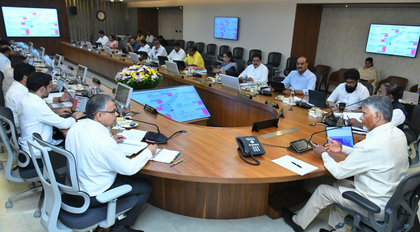
Chairing the State Cabinet meeting, Chief Minister N. Chandrababu Naidu asked officials to examine the feasibility of work-from-home for two days a week in certain wings of government departments.
The Chief Minister gave specific directives regarding these austerity measures in the backdrop of the prevailing situation in West Asia and in response to PM Modi’s call.
Under the ‘My country, my responsibility’ initiative, public representatives and officials will voluntarily reduce the number of vehicles in their convoys, conduct meetings virtually, and observe a “No Vehicle Friday” every week, Minister for Information and Public Relations Kolusu Parthasarathy said while briefing the media about the decisions taken by the Cabinet.
The Chief Minister appealed to people to participate in the initiative and voluntarily adopt austerity measures.
The Cabinet meeting felt that, in light of the prevailing geopolitical tensions, reducing fuel consumption, conserving foreign exchange reserves, facilitating the export of agricultural produce grown by farmers, and minimising imports such as oil, gas, and urea would prove beneficial.
It was noted that the ongoing conflict could potentially impact the export of commodities such as bananas, food grains, and various agricultural and horticultural crops.
Consequently, public representatives and officials were called upon to set an example for the public in adopting austerity measures by strictly adhering to these practices themselves, the minister said.
Plans were outlined to implement various measures across every government department in the state, such as ensuring that fuel consumption limits for official vehicles are kept to a minimum and mandating the purchase of only electric vehicles whenever the government procures new vehicles.
Extensive awareness campaigns will be conducted to sensitise the public.
It was suggested that citizens adopt eco-friendly practices, such as walking and cycling, and that public representatives and officials undertake short-distance walking during their tours.
It was further observed that if ministers and officials were to cycle to the Secretariat once a week, it would undoubtedly have a positive impact on the public, inspiring them to follow suit.
It was suggested that educational institutions across the state observe “No Vehicle Days” twice a week.
Incentives would be provided to these institutions as part of the initiative to increase the number of electric vehicle charging stations within the state.
The Chief Minister directed the police to take measures to prevent vehicles from remaining stationary in traffic for extended periods.
He appealed to citizens to reduce foreign travel and instead visit various regions within India during the summer and other holidays.
He also requested that people reduce their purchases of foreign goods and prioritise domestically manufactured products.
Chief Minister Naidu emphasised the need for restraint in gold purchases, explaining that India imports hundreds of tonnes of gold annually, a practice that depletes foreign exchange reserves; therefore, the public should voluntarily curtail their purchases.
Disclaimer: This post has been auto-published from an agency feed without any modifications to the text and has not been reviewed by an editor
Open in app