
Bangladesh's political cartoons fading amid self-censorship, corporate pressure: Report
By IANS | Updated: May 10, 2026 17:40 IST2026-05-10T17:38:38+5:302026-05-10T17:40:11+5:30



Dhaka, May 10 Political cartoons in Bangladesh, once regarded as a sharp and fearless medium of public dissent ...
Bangladesh's political cartoons fading amid self-censorship, corporate pressure: Report
Dhaka, May 10 Political cartoons in Bangladesh, once regarded as a sharp and fearless medium of public dissent and satire, are steadily disappearing from mainstream media amid growing corporate influence, self-censorship, and the monetisation of news content, according to a report.
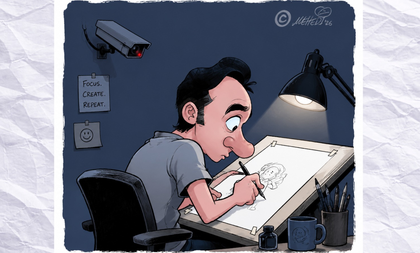
The concerns were highlighted in an interview published by Bangladesh-based English daily, The Daily Star, authored by Khairul Hassan Jahin, in which leading Bangladeshi cartoonist Mehedi Haque reflected on the shrinking space for political satire in the country.
Haque, who serves as Executive Editor of the satirical magazine ''Unmad'', Senior Cartoonist at New Age, and Editor and Publisher of Dhaka Comics, said the decline began during a prolonged period of political dominance by a single party, when major corporate groups increasingly entered the media sector and prioritised maintaining favourable ties with the government.
According to him, informal editorial restrictions gradually emerged, particularly around criticism or satire directed at ruling political figures.
He also pointed to the amplifying role of social media, saying online backlash often intensified the perceived risks associated with political cartooning.
"Artists were presented with financially rewarding opportunities, including projects aligned with the ruling establishment. Many preferred those 'safe' options over the uncertainty of political satire," Haque said in the interview.
He added that the decline of political cartoons is driven less by direct censorship and more by self-censorship among artists who fear backlash and professional consequences.
Haque also warned that humour itself is vanishing from public discourse, replaced increasingly by outrage-driven content that is easier to monetise online.
The cartoonist noted that political satire historically functioned as a barometer of press freedom and public dissent in Bangladesh.
"What is being lost is humour itself," he said, adding that satire traditionally allowed societies to critique power structures while reducing anger and division through wit.
The Daily Star report also highlighted Haque's criticism of corporate ownership in the media industry, which he said has contributed to greater editorial caution around sensitive political issues.
Despite receiving legal notices over his work, Haque said that factual reporting and responsible satire allowed him to defend his cartoons confidently.
Bangladesh has a long tradition of political cartoons, with satirical illustrations historically appearing prominently in newspapers and magazines as commentary on corruption, governance, and social issues.
Earlier reports also documented how political cartoons once played a major role in protest movements and democratic discourse in the country.
Observers say the conversation around the decline of political cartoons also reflects broader concerns over media freedom and the pressures faced by journalists and artists in Bangladesh's evolving political environment.
Recent international reports have additionally flagged growing challenges for the country's media institutions and concerns over press freedom.
Disclaimer: This post has been auto-published from an agency feed without any modifications to the text and has not been reviewed by an editor
Open in app