
Bankim 'Da' or Bankim 'Babu'? How PM Modi responded to Trinamool MP's objection
By IANS | Updated: December 8, 2025 15:20 IST2025-12-08T15:17:03+5:302025-12-08T15:20:06+5:30


New Delhi, Dec 8 Prime Minister Narendra Modi's address in the Lok Sabha, opening a discussion on the ...
Bankim 'Da' or Bankim 'Babu'? How PM Modi responded to Trinamool MP's objection
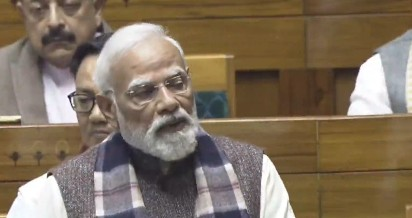
New Delhi, Dec 8 Prime Minister Narendra Modi's address in the Lok Sabha, opening a discussion on the 150th anniversary of the national song 'Vande Mataram', briefly detoured into a linguistic debate on Monday.
The exchange occurred after the Prime Minister referred to the song's composer and iconic Bengali writer Bankim Chandra Chatterjee as "Bankim Da".
Trinamool Congress MP Saugata Roy immediately objected, saying that "Da" -- a shortened form of Dada, commonly used by Bengalis to address peers or older brothers -- was too informal for a cultural figure of Bankim Chandra's stature.
"You are saying 'Bankim Da'? You should say 'Bankim Babu'," Roy said.
PM Modi promptly accepted the correction.
"I will say Bankim Babu. Thank you, I respect your sentiments," he replied, before adding playfully, "I can call you dada, right? Or do you have an objection to that too?"
The Prime Minister then proceeded with his remarks on 'Vande Mataram', emphasising its role during India's freedom struggle.
He described the song as more than just a call for political liberation -- a "sacred war cry to rid 'Bharat Mata' (motherland) of the remnants of colonial rule."
PM Modi noted that the British colonial administration had been so threatened by the song's influence that they imposed legal restrictions on singing or printing it, enforcing harsh penalties to suppress its use.
He also launched a sharp attack on the Congress, alleging that the party once fractured the national song under pressure from the Muslim League and "knelt before them".
PM Modi said the British had long pursued a Divide-and-Rule policy, choosing Bengal as their first target.
"That was a time when Bengal's strength inspired the country. In 1905, when the British divided Bengal, 'Vande Mataram' stood like a rock. 'Street to street' was the slogan for Bengal's unity, and that slogan continued to inspire," he added.
The ongoing parliamentary discussion aims to highlight the historical importance and enduring legacy of 'Vande Mataram' in India's Independence movement.
A total of 10 hours has been allocated for the debate, which will also be held in the Rajya Sabha.
Disclaimer: This post has been auto-published from an agency feed without any modifications to the text and has not been reviewed by an editor
Open in app