
Delhi govt seeks feedback on draft EV policy 2026 to promote clean mobility
By IANS | Updated: April 11, 2026 10:00 IST2026-04-11T09:57:21+5:302026-04-11T10:00:19+5:30



New Delhi, April 11 The Delhi government on Saturday asked all stakeholders, including general public, to submit their ...
Delhi govt seeks feedback on draft EV policy 2026 to promote clean mobility
New Delhi, April 11 The Delhi government on Saturday asked all stakeholders, including general public, to submit their feedback and comments via emails and posts within 30 days on the draft Delhi Electric Vehicle (EV) Policy 2026.
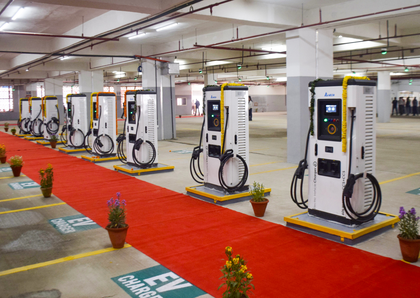
The draft policy, uploaded on the official website of Transport Department and applicable till 2030, aims to curb vehicular pollution and promote adoption of electric vehicles.
“All stakeholders including general public are invited to submit their feedback/comments within 30 days from the date of publication through the following modes —
"In this regard, the public is humbly requested to avoid visiting the office premises, as the same may cause unnecessary crowding. No objections or suggestions received after the expiry of the said period shall be considered,” according to the notification.
According to the state government, Delhi is committed to curb air pollution and accordingly aims to promote and adopt clean mobility transition through targeted incentives, infrastructure development, and strong regulatory measures.
“The Delhi Electric Vehicle Policy 2026–2030 (four years) builds on this momentum to accelerate electric vehicle (EV) adoption, improve air quality, and create a supportive ecosystem for electric mobility. The policy will be applicable from the date of the notification,” the notification further said.
The policy aims to accelerate adoption of EVs across all major vehicle segments; support installation of a comprehensive public and private charging network across Delhi; enable a robust EV supply chain including battery recycling, servicing, and component recovery; improve air quality by reducing reliance on Internal Combustion Engine (ICE) vehicles; and ensure fiscal efficiency and transparent implementation.
For two-wheelers, the ex-factory price of the electric two-wheeler shall not exceed Rs 2.25 lakh.
The state government will provide incentives to promote electric two-wheeler adoption: In first year’s registration, Rs 10,000 per kWh, up to a maximum of Rs 30,000; In second year from date of notification, Rs 6,600 per kWh, up to a maximum of Rs 20,000; and in third year of notification, Rs 3,300 per kWh, up to a maximum of Rs 10,000.
For electric three-wheeler auto-rickshaw, year of registration incentive is: Year 1 from the date of notification, Rs 50,000; year 2 from the date of notification, Rs 40,000 and year 3 from the date of notification, Rs 30,000.
For electric four-wheeler goods Vehicles, GNCTD will provide the following incentives to promote e-trucks adoption: Year 1 from the date of notification, Rs 1,00,000; year 2 from the date of notification, R 75,000 and year 3 from the date of notification, Rs 50,000, as per the notification.
For electric two-wheeler, a scrapping incentive of Rs 10,000 will be provided upon purchase of a new electric vehicle under this policy, provided the purchase is made within six months of issuance of the Certificate of Deposit (CoD) from an authorised scrapping facility.
This incentive will be applicable for scrapping of Delhi registered BS-IV and below, two-wheelers, according to the draft policy.
A scrapping incentive of Rs 25,000 will be provided upon purchase of a new electric three-wheeler vehicle under this policy with the same condition for two-wheelers.
For electric car (non-transport), a scrapping incentive of Rs 1,00,000 will be provided upon purchase of a new electric car under this policy, subject to an ex-factory price not exceeding Rs 30 lakh.
For electric four-wheeler goods carriers (N1 trucks), a scrapping incentive of Rs 50,000 will be provided upon purchase of a new electric vehicle under this policy.
Disclaimer: This post has been auto-published from an agency feed without any modifications to the text and has not been reviewed by an editor
Open in app