
Delhi HC dismisses PIL seeking tax on agricultural income
By IANS | Updated: May 13, 2026 21:00 IST2026-05-13T20:57:42+5:302026-05-13T21:00:14+5:30



New Delhi, May 13 The Delhi High Court on Wednesday dismissed a Public Interest Litigation (PIL) seeking directions ...
Delhi HC dismisses PIL seeking tax on agricultural income
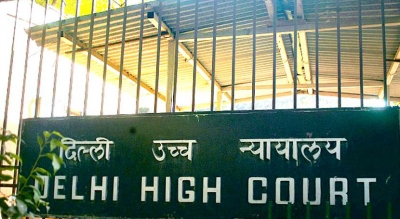
New Delhi, May 13 The Delhi High Court on Wednesday dismissed a Public Interest Litigation (PIL) seeking directions to impose tax on agricultural income in the national capital, holding that the court cannot issue a mandamus directing the legislature to enact a particular law.
A Division Bench of Chief Justice (CJ) D.K. Upadhyaya and Justice Tejas Karia termed the plea “highly misconceived” and refused to entertain the petition filed by one Aakash Goel.
“From a perusal of the prayer clause, it is apparent that the petitioner is asking the court to issue a mandamus to the legislature to enact a particular law. Such a mandamus, in our clear opinion, is not permissible. The writ petition is highly misconceived,” the Delhi High Court observed.
During the hearing, the CJ Upadhyaya-led Bench repeatedly questioned the maintainability of the plea, observing that taxation policy and legislative choices fall within the exclusive domain of the government and legislature.
“We cannot issue a mandamus asking them to legislate,” it remarked.
The petitioner had sought directions to the Delhi government to consider legislative and policy measures for taxation of high agricultural income in Delhi, contending that the continued exemption of agricultural income resulted in fiscal inequality and arbitrary classification among taxpayers.
The plea argued that salaried professionals, traders and other taxpayers were subjected to full taxation, while a class of high-income agricultural earners continued to enjoy blanket exemption.
Referring to Article 246 read with Entry 46 of the State List, the petition contended that the Delhi government possesses legislative competence to enact laws relating to taxation of agricultural income within its jurisdiction.
The PIL further claimed that continued inaction by the authorities violated Articles 14, 38 and 265 of the Constitution and enabled misuse of the agricultural income exemption for tax evasion, relying on various committee reports, including those of the K.N. Raj Committee and the Tax Administration Reform Commission, to contend that the exemption has often been misused for such purposes.
During the hearing, advocate Kumar Utkarsh, appearing for the petitioner, contended that he was only seeking consideration of the issue by the authorities and not a direct command to legislate.
However, the Delhi High Court observed that the reliefs sought in the petition effectively amounted to seeking a direction for the enactment of a law.
When the petitioner's counsel argued that the distinction between agricultural and non-agricultural income was arbitrary, the CJ Upadhyaya-led Bench responded: “That is what you feel. That will not form the basis of any mandamus.”
The petition had also referred to representations submitted by the petitioner before authorities in October 2025 and January 2026 seeking consideration of legislative reforms, alleging that no policy decision had been taken despite repeated requests.
Disclaimer: This post has been auto-published from an agency feed without any modifications to the text and has not been reviewed by an editor
Open in app