
From Green To Pink Corridors: The Hidden System Controlling India’s Traffic Flow - Know Who Moves First
By Lokmat Times Desk | Updated: May 3, 2026 14:06 IST2026-05-03T14:06:44+5:302026-05-03T14:06:51+5:30



Lungi Ngidi recently experienced an extraordinary dash through Delhi, though it had nothing to do with his pace bowling ...
From Green To Pink Corridors: The Hidden System Controlling India’s Traffic Flow - Know Who Moves First
Lungi Ngidi recently experienced an extraordinary dash through Delhi, though it had nothing to do with his pace bowling during an IPL match at the Arun Jaitley Stadium. The South African fast bowler covered nearly nine kilometres in just 11 minutes during peak traffic hours, a feat almost unimaginable on Delhi’s notoriously congested roads. Under normal conditions, the same journey can easily consume 30 to 45 minutes while testing the patience of commuters caught in endless traffic snarls. However, Ngidi’s journey was far from ordinary. Moments earlier, he had suffered a serious blow to the head while attempting a catch during the match, forcing an emergency rush to the hospital.
Green Corridor Rescue
Ngidi was transported in an ambulance to BLK-Max Hospital, with the Delhi Police creating a special “green corridor” to guarantee swift medical attention. Officers temporarily halted heavy traffic, clearing the route to ensure the cricketer reached the hospital without delay. Although the incident was one the Delhi Capitals pacer would rather forget, it highlighted the growing importance of green corridors in India’s crowded urban spaces. These dedicated emergency routes have increasingly become examples of rare civic empathy, enabling ambulances carrying critical patients or harvested organs to move rapidly through cities otherwise paralysed by congestion and indifference.
Saving Lives Faster
Green corridors have transformed emergency transportation by converting busy roads into temporary signal-free passageways for ambulances. In many cases, they are primarily used for transporting harvested organs, often helping save lives by significantly reducing travel time between hospitals and airports. Mumbai, in particular, has emerged as a leading example of effective planning and coordination, with authorities reportedly cutting travel time to under 20 minutes for organ transplant operations. Ironically, these special routes exist on the same roads that claim hundreds of lives every year due to accidents and poor traffic conditions, yet their creation often sparks admiration for efficient governance and public cooperation.
Colour-Coded Movement System
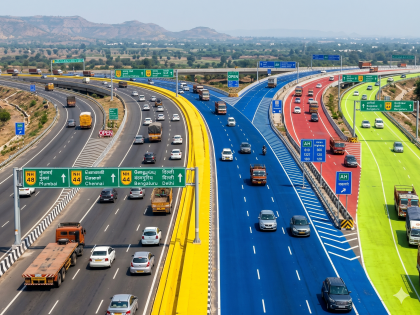
Traffic congestion has become an unavoidable reality in modern cities, affecting everyone regardless of status. Yet special corridors are increasingly redefining this equality by assigning different colours and priorities to movement. Urban roads are no longer merely grey stretches of asphalt; they now include a system of white, red, yellow, black, blue and pink corridors, each designed for a specific purpose. These colour-coded pathways reflect a city’s attempt to decide which movements deserve urgency or priority. From emergency vehicles to public transport and freight, corridors are reshaping the way cities manage mobility while balancing safety, efficiency and public convenience.
White And Disaster Routes
White corridors function similarly to green corridors but are typically reserved for VVIP movement and high-security travel. These routes involve traffic sanitisation, restricted access points and police escorts to ensure uninterrupted passage, especially during emergencies involving important dignitaries. Several Indian cities are also experimenting with integrated traffic control rooms that can quickly create emergency ambulance corridors whenever required. Meanwhile, states like Uttarakhand have witnessed the growing significance of disaster and evacuation corridors. During floods, earthquakes or landslides, authorities clear designated routes to deliver relief supplies and safely evacuate affected residents from vulnerable regions to secure locations.
Freight Traffic Corridors
Not every corridor is linked to emergencies. In Delhi-NCR, red corridors regulate freight traffic by restricting heavy vehicles during peak commuting hours to ease congestion on roads dominated by office-goers. Similarly, yellow corridors on routes such as the Mumbai-Pune Expressway permit commercial transport only during specific time slots, helping passenger vehicles travel faster and more safely. Black corridors, though less common, are specially designed for oversized or hazardous cargo, including industrial machinery, chemicals and defence equipment. These movements usually occur under strict supervision, with pilot vehicles and police escorts ensuring the safe transportation of sensitive materials across highways and cities.
Public Transport Focus
Blue corridors focus on improving public transport efficiency by providing dedicated lanes for buses. Bengaluru’s Outer Ring Road has experimented with such lanes to reduce delays during rush hours, while Ahmedabad’s Bus Rapid Transit system remains one of India’s most successful models for segregated bus routes. Dedicated stations and priority traffic signals help buses operate with metro-like efficiency on regular roads. Meanwhile, pink corridors are being tested in cities like Delhi to improve women’s safety and accessibility in public transport. These include women-only buses and reserved travel routes aimed at making urban mobility safer and more inclusive for female commuters.
Wildlife And Cycling
Cities like Pune and Bengaluru are also investing in cycling and pedestrian corridors to encourage non-motorised transport. Authorities are building physically separated pathways along riversides and major roads to improve safety for walkers and cyclists while reducing congestion and pollution. Beyond urban mobility, ecological corridors are emerging as essential tools for wildlife conservation. Forest stretches linking Kanha and Pench national parks, as well as Bandipur, Mudumalai and Wayanad wildlife zones, allow animals like tigers and elephants to migrate and breed naturally. However, expanding highways have disrupted these habitats, prompting the development of wildlife underpasses as a practical compromise.
Challenges Of Corridors
The corridor concept is now extending to railway infrastructure as metro and freight corridors seek to streamline transportation within and between cities. Yet experts warn that an expanding network of corridors works effectively only when the movement of people, goods, aid, wildlife and emergency services remains coordinated. Problems arise when multiple corridors compete for the same space, exposing weaknesses in traffic management and infrastructure planning. Former Institute of Urban Transport Director General B. I. Singal argues that corridors alone cannot solve traffic inefficiencies, which are rooted in poor urban planning and ineffective management of shared infrastructure.
Beyond Temporary Solutions
While corridors may provide temporary relief, critics believe they often shift traffic problems elsewhere instead of addressing the deeper issue of urban congestion. Over time, these systems have evolved into mechanisms that create hierarchies of movement, deciding which vehicles or users deserve priority over others. As cities continue to grow, managing overlapping corridors may become an even bigger challenge. Experts caution that assigning colours and labels to lanes can only offer limited satisfaction if authorities fail to address broader mobility concerns. Ultimately, true success will depend on developing balanced systems where emergency, commercial and everyday movement can coexist without constant conflict.
Corridors At A Glance
| Corridor Type | Purpose | Key Features |
|---|---|---|
| Green Corridor | Emergency medical transport | Used for ambulances, organ transport and critical patients |
| White Corridor | VVIP movement | Police escorts, sanitised routes and controlled access |
| Red Corridor | Peak-hour traffic control | Restricts heavy vehicles during busy commuting hours |
| Yellow Corridor | Freight management | Commercial vehicles allowed only during fixed time slots |
| Black Corridor | Hazardous cargo movement | Used for chemicals, machinery and defence equipment |
| Blue Corridor | Public transport priority | Dedicated lanes for buses and rapid transit systems |
| Pink Corridor | Women’s safety in transit | Women-only buses and safer travel routes |
| Cycling Corridor | Non-motorised transport | Dedicated lanes for cyclists and pedestrians |
| Wildlife Corridor | Animal migration and breeding | Connects forests and habitats for wildlife movement |
| Disaster Corridor | Relief and evacuation | Cleared during floods, earthquakes and emergencies |
| Metro Corridor | Urban rail transport | Faster passenger movement within cities |
| Freight Corridor | Cargo transportation | Dedicated rail or road routes for goods movement |
| BRT Corridor | Bus Rapid Transit operations | Segregated bus lanes with priority signalling |
| Expressway Corridor | High-speed intercity travel | Designed for faster and safer long-distance movement |
