
India closer to expanding its nuclear fuel base: Report
By IANS | Updated: April 19, 2026 15:50 IST2026-04-19T15:46:17+5:302026-04-19T15:50:14+5:30



New Delhi, April 19 India may be closer than ever to achieving long-term nuclear self-reliance, following a key ...
India closer to expanding its nuclear fuel base: Report
New Delhi, April 19 India may be closer than ever to achieving long-term nuclear self-reliance, following a key milestone in its ambitious three-stage nuclear programme, according to an article.
The report in the Vietnam Times described the development as a potential turning point in India’s decades-old strategy to overcome fuel constraints and build a sustainable nuclear energy base.
According to the article, India has long faced a fundamental challenge -- "India didn’t have much uranium, the fuel most nuclear reactors run on." Even today, it noted, the country remains dependent on imports, including major agreements with countries like Canada. However, India possesses "vast reserves of thorium or 25 per cent of the global total, buried in its sands," offering a unique long-term opportunity.
The report says that thorium cannot be directly used as fuel and requires conversion, prompting India to adopt a long-term approach rather than quick fixes."Instead of chasing speed, (Indian nuclear scientist Dr Homi J.) Bhabha chose something far more ambitious: a system that could turn this resource scarcity into self-reliance, even if it took decades to get there."
This vision led to India’s three-stage nuclear programme—beginning with uranium, transitioning to plutonium, and eventually unlocking thorium. For years, the second stage remained incomplete. But that changed recently.
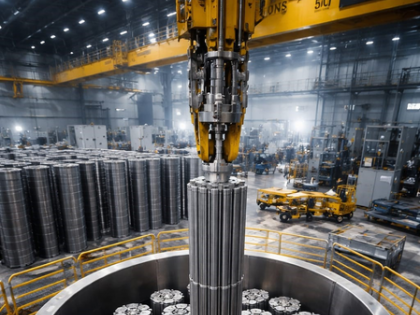
"On April 6th, India’s Prototype Fast Breeder Reactor (PFBR) at Kalpakkam… achieved criticality for the first time.” The report underscores the importance of this moment, noting that “criticality is the point where a nuclear reactor becomes self-sustaining," the article said.
While fast breeder reactors exist elsewhere, the Vietnam Times points out that "in most other countries, the efforts behind these reactors haven’t exactly gone as planned". India’s persistence, therefore, stands out, it said. “And yet, India didn’t back down from this pursuit. It stayed committed to breeder reactors because they were essential."
The significance of the milestone lies in its long-term implications. As per the Vietnam Times, "by achieving criticality, India has shown that it can run a reactor using plutonium-based fuel… bringing the country closer to… expanding its nuclear fuel base". These reactors can "produce more usable material than they consume", effectively transforming limited resources into sustainable fuel.
The report also highlights the technological complexity involved, including the use of mixed oxide fuel and liquid sodium cooling, which "has to be sealed, monitored, and engineered with extreme precision".
Despite the breakthrough, the report cautions that challenges remain. Nuclear energy currently accounts for just over 3 per cent of India’s electricity generation, and "there’s still a long way to go". However, if successful, the programme could significantly reduce dependence on imported uranium.
Summing up the achievement, the report notes that India may finally be realising Dr Bhabha’s long-held vision: "Running on fuel it already has instead of relying on the world for it."
Disclaimer: This post has been auto-published from an agency feed without any modifications to the text and has not been reviewed by an editor
Open in app