
J-K: All gates of Baglihar Dam on Chenab remain closed even a year after Indus Waters Treaty suspension
By ANI | Updated: May 3, 2026 13:00 IST2026-05-03T18:29:57+5:302026-05-03T13:00:03+5:30



Ramban (Jammu and Kashmir) [India], May 3 : All gates of the Baglihar Dam on the Chenab River in ...
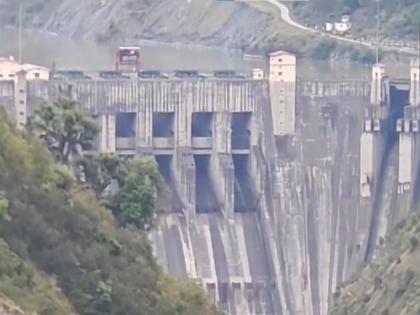
J-K: All gates of Baglihar Dam on Chenab remain closed even a year after Indus Waters Treaty suspension
Ramban (Jammu and Kashmir) [India], May 3 : All gates of the Baglihar Dam on the Chenab River in Ramban district continue to remain closed even a year after the suspension of the Indus Waters Treaty, which was put on hold following the Pahalgam attack.
The continued closure of the gates highlights the sustained impact of the treaty's suspension on water management and hydroelectric operations in the region. The Baglihar Hydroelectric Power Project, a key infrastructure on the Chenab River, has remained under close monitoring since the decision was taken in the wake of the attack.
The Indus Waters Treaty, which governs the sharing of river waters between India and Pakistan, was suspended following the Pahalgam attack, marking a significant shift in bilateral water-sharing arrangements.
The Baglihar Dam, located in the Ramban district of Jammu and Kashmir, plays a crucial role in hydroelectric power generation and water regulation on the Chenab River. The closure of its gates is being seen as part of broader measures linked to the treaty suspension.
Despite reaching out to an agreement on the cessation of hostilities, the Indian government's position on the Indus Waters Treaty remains unchanged, with the agreement still in abeyance following the terror attack in Pahalgam.
The Indus system comprises the main Indus River, Jhelum, Chenab, Ravi, Beas and Sutlej. The basin is mainly shared by India and Pakistan, with a small share for China and Afghanistan.
Under the Indus Waters Treaty signed between India and Pakistan in 1960, all the waters of three rivers, namely Ravi, Sutlej and Beas ( Eastern Rivers), averaging around 33 million acre feet ( MAF) were allocated to India for exclusive use.
The western riversIndus, Jhelum, and Chenabcarrying an average flow of around 135 MAF, were allocated to Pakistan, while India retained limited rights for domestic, non-consumptive, and agricultural use as specified under the treaty.
India has also been given the right to generate hydroelectricity through run-of-the-river (RoR) projects on the Western Rivers, subject to specific criteria for design and operation, which are unrestricted.
To fully utilise the eastern river waters allocated to it, India has developed major infrastructure projects including the Bhakra Dam on the Sutlej, Pong and Pandoh dams on the Beas, and Thein (Ranjit Sagar) Dam on the Ravi.
These storage works, together with other works like Beas-Sutlej Link, Madhopur-Beas Link, Indira Gandhi Nahar Project etc has helped India utilise most of the waters of waters of Eastern rivers.
Disclaimer: This post has been auto-published from an agency feed without any modifications to the text and has not been reviewed by an editor
Open in app