
Kerala scales up heritage tourism with 33 'Spice Journey' trails
By IANS | Updated: January 7, 2026 16:45 IST2026-01-07T16:42:52+5:302026-01-07T16:45:18+5:30


Kochi, Jan 7 Kerala has taken a major step to deepen and monetise its globally recognised heritage tourism ...
Kerala scales up heritage tourism with 33 'Spice Journey' trails
Kochi, Jan 7 Kerala has taken a major step to deepen and monetise its globally recognised heritage tourism portfolio with the launch of 33 curated "Spice Journey" trails, aimed at transforming the state's historic spice trade legacy into immersive tourism circuits spanning from Kasaragod in the north to Kollam in the south.
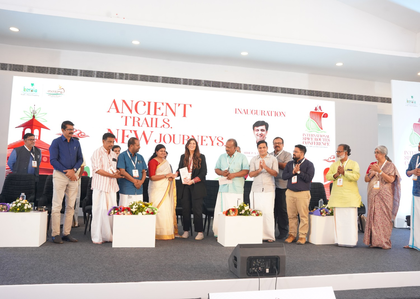
The initiative, spearheaded by the Muziris Heritage Projects, was unveiled at the three-day International Spice Routes Conference, inaugurated by Tourism Minister P.A. Mohamed Riyas.
The project seeks to position Kerala not merely as a leisure destination but as a living museum of maritime trade, cultural exchange and culinary history that once connected the state to West Asia, Europe, and the Mediterranean world.
Built around the legacy of the ancient Spice Routes that made Kerala a global trading hub centuries ago, the Spice Journeys programme offers travellers curated walks through streets, temples, churches, ports and markets where history seamlessly blends with contemporary life.
The circuit has been structured into eight regional clusters comprising 33 distinct journeys, each tailored to the cultural and historical identity of its geography.
The trails begin at Bekal in Kasaragod and extend through Kannur, Kozhikode, Thrissur, Ernakulam, Alappuzha, and Kollam.
The Kasaragod-Bekal cluster includes Kodagu–Thulunadu and Kodagu–Bekal trails, some of which extend into bordering regions of Karnataka, highlighting historical trade and cultural overlaps.
The Kannur–Thalassery stretch promises signature experiences such as Mappila culinary sessions, Theyyam rituals, and colonial heritage walks.
Fort Kochi emerges as a key anchor, offering a deep dive into its evolution as a global spice port, complemented by colonial architecture, trade narratives and curated food experiences.
The Ernakulam–Thrissur Muziris Heritage Walk traces the region’s ancient Jewish connections and the port of Muziris, once frequented by merchant ships from West Asia and Europe.
Further south, Alappuzha and Kollam add layers of backwater heritage, biodiversity corridors and coastal trade histories, expanding the tourism offering beyond conventional sightseeing.
Riyas announced the International Spice Routes Heritage Network as a collaborative global platform to promote heritage-led tourism.
The conference features technical sessions on sustaining transnational heritage corridors, digital tourism, and reimagining the Spice Routes for future travel economies.
Disclaimer: This post has been auto-published from an agency feed without any modifications to the text and has not been reviewed by an editor
Open in app