
Lenskart Bindi-Hijab Controversy: Peyush Bansal Clarifies ‘Inaccurate’ Policy
By Lokmat Times Desk | Updated: April 16, 2026 14:32 IST2026-04-16T14:28:49+5:302026-04-16T14:32:46+5:30



A purported internal document linked to Lenskart ignited widespread controversy after circulating on social media, with users alleging it ...
Lenskart Bindi-Hijab Controversy: Peyush Bansal Clarifies ‘Inaccurate’ Policy
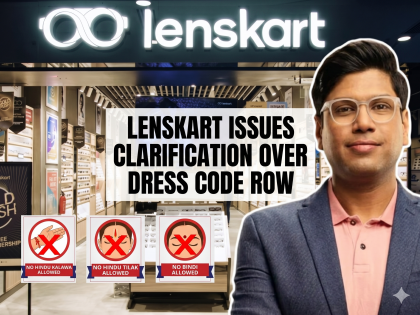
A purported internal document linked to Lenskart ignited widespread controversy after circulating on social media, with users alleging it outlined a workplace dress code that disallowed bindi and tilak while permitting the hijab. The claims quickly drew criticism and sparked debates around religious expression at work. As the backlash intensified, Peyush Bansal addressed the issue publicly, stating that the document being shared was inaccurate and did not represent the company’s current policies. He emphasised that the guidelines in question were outdated and no longer reflected Lenskart’s present approach.
Lenskart, a leading name in the eyewear market, has built its reputation by offering affordable products through in-house manufacturing and eliminating intermediaries. Since attaining unicorn status in 2019, the company has continued to expand rapidly and is now considered a potential “soonicorn,” reportedly preparing for a public listing. With an estimated valuation of around $5.6 billion, the firm has attracted significant investor interest. However, the resurfacing of the alleged dress code policy overshadowed its business achievements, as critics questioned the company’s stance on inclusivity and equal treatment of religious symbols within its workforce.
The controversial document detailed specific guidelines related to appearance, particularly focusing on religious markers. It reportedly stated that sindoor, traditionally worn by married Hindu women, should be applied minimally and not extend onto the forehead. The document also claimed that bindis were not permitted. At the same time, it outlined rules for wearing hijabs, specifying that they should be black, provide moderate coverage, and not obscure the company logo. Additionally, it mentioned that burkhas were not allowed inside stores. The guidelines further indicated that items like clutches, bindis, and religious wrist threads, such as kalawa, should not be worn by employees.
The issue gained further traction when author and activist Shefali Vaidya publicly questioned the company’s stance on social media, asking why certain religious symbols appeared to be restricted while others were allowed. Her post directly tagged Peyush Bansal, prompting a response. In his clarification, Bansal acknowledged that earlier versions of grooming policies may have existed, but stressed that they had since been revised. He stated that Lenskart’s current guidelines impose no limitations on religious expression, including the wearing of bindi or tilak, and reiterated that the company regularly updates its policies to reflect evolving values.
Peyush Bansal posted on X, "Hi, all. I’ve been seeing an inaccurate policy document going viral about Lenskart. I want to speak directly that this document does not reflect our present guidelines. Our policy has no restrictions on any form of religious expression, including bindi and tilak, and we continue to review our guidelines regularly. Our grooming policy has evolved over the years and outdated versions do not represent who we are today. We apologize for the confusion and concern this situation has caused. We as a company, continue to learn and build. Any lapses in our language or policies have and will continue to be addressed. We have thousands of team members across Bharat who wear their faith and culture proudly every day at our stores. They are Lenskart. Lenskart was built in Bharat, by Indians, for Indians. Every symbol and every tradition our people carry is a part of who we are as a company. I will never let that be compromised."
Hi, all. I’ve been seeing an inaccurate policy document going viral about Lenskart.
— Peyush Bansal (@peyushbansal) April 15, 2026
I want to speak directly that this document does not reflect our present guidelines.
Our policy has no restrictions on any form of religious expression, including bindi and tilak, and we…
Despite the controversy, Lenskart continues to show strong financial performance. The company recently reported a significant surge in profitability, with net profit rising sharply to Rs 1.31 billion from Rs 18.5 million in the same period the previous year. Revenue also saw robust growth, increasing by 38.8% to Rs 23.08 billion, surpassing the rise in expenses. The company’s shares have performed well, recently reaching Rs 547, reflecting investor confidence. While the dress code debate has sparked public scrutiny, Lenskart’s business trajectory remains firmly upward as it moves closer to a potential IPO.
Open in app