
Madhumita Shukla murder case: SC grants relief to convict after 22 years in jail
By IANS | Updated: May 15, 2026 20:20 IST2026-05-15T20:19:34+5:302026-05-15T20:20:07+5:30



New Delhi, May 15 The Supreme Court on Friday ordered the premature release of Rohit Chaturvedi, one of ...
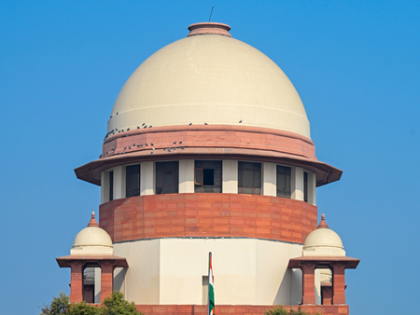
Madhumita Shukla murder case: SC grants relief to convict after 22 years in jail
New Delhi, May 15 The Supreme Court on Friday ordered the premature release of Rohit Chaturvedi, one of the convicts in the 2003 murder case of poetess Madhumita Shukla, holding that the Union Home Ministry’s decision rejecting his remission plea was “arbitrary, non-speaking, unsustainable in law and merit”.
A Bench of Justices B.V. Nagarathna and Ujjal Bhuyan quashed the July 9, 2025, letter issued by the Ministry of Home Affairs (MHA), which had declined to concur with the Uttarakhand government’s recommendation for Chaturvedi’s release after more than 22 years of incarceration.
“Quite clearly, the letter is ex facie non-speaking, as it does not disclose any reason whatsoever for the conclusion arrived at by the Competent Authority,” the apex court said. It added that “recording of reasons is not an empty formality, it is a safeguard against arbitrariness and ensures transparency, fairness, and accountability in decision-making”.
The top court held that the MHA order merely stated that it did not concur with the Uttarakhand government’s proposal without disclosing the basis for disagreement. “There is no discussion of the petitioner’s conduct, applicable remission policy, or any specific adverse material, if at all, against the petitioner,” the Justice Nagarathna-led Bench observed.
The judgment said that executive discretion in remission matters “is not uncanalised” and must be exercised on “relevant, rational, and non-discriminatory considerations”.
Rejecting the Centre’s contention that remission could be denied due to the heinous nature of the offence, the Supreme Court said: “In a constitutional polity governed by the rule of law, the denial of remission cannot rest solely on the ground of heinousness of the crime.” “The gravity and heinousness of the offence stand exhausted at the stage of sentencing, and the judicial determination of punishment necessarily incorporates these considerations,” it added.
The Supreme Court stressed that remission is linked to the reformative theory of punishment and observed that “justice does not permit permanent incarceration of an individual in the shadow of their worst act”.
Referring to the petitioner’s conduct in jail, the apex court found that the custody certificate specifically recorded that his conduct during incarceration had been “good”.
The Justice Nagarathna-led Bench also took note of the fact that co-convict and former Uttar Pradesh minister Amarmani Tripathi had already been granted premature release by the Uttar Pradesh government in August 2023 after undergoing around 17 years of actual imprisonment.
“Once a co-accused in the very same offence arising out of the same incident has been granted the benefit of premature release after undergoing a lesser period of incarceration, the denial of similar consideration to the petitioner necessarily requires the existence of cogent, rational, and clearly discernible distinguishing circumstances,” the top court said.
“In the absence of such reasons, differential treatment between co-accused would fall foul of the constitutional requirement of fairness and non-arbitrariness,” it added.
The apex court said that remanding the matter back to the MHA for reconsideration would serve no useful purpose since the Union government had already articulated its stand before the top court. “Sending the matter to the very same authority for reconsideration would be futile and not serve the interests of justice,” it observed.
Since Chaturvedi was already on interim bail pursuant to an earlier order passed in May 2025, the Supreme Court directed that his surrender “shall not be required” and that authorities “shall treat him as having been prematurely released/remitted”.
Former Uttar Pradesh minister Amarmani Tripathi, his wife Madhumani Tripathi, nephew Rohit Chaturvedi, and shooter Santosh Rai were convicted by a Dehradun court in 2007 for the murder of poetess Madhumita Shukla.
The trial had been shifted from Uttar Pradesh to Uttarakhand on the orders of the Supreme Court. The case had witnessed prolonged litigation over the question of the “appropriate government” competent to decide remission.
In December 2023, the Supreme Court had initially directed the Uttar Pradesh government to examine Chaturvedi’s plea for early release.
However, after the verdict in the second Bilkis Bano case, the apex court recalled its earlier order and clarified that the government of Uttarakhand, where the trial and conviction had taken place, was the competent authority to consider remission under Section 432(7) of the Code of Criminal Procedure. Subsequently, Uttarakhand recommended Chaturvedi’s premature release, but the proposal was rejected by the MHA, leading to the present proceedings.
Since the case was investigated by the CBI, the Uttarakhand government could decide the prayer for grant of remission only after obtaining the concurrence of the Central Government.
Disclaimer: This post has been auto-published from an agency feed without any modifications to the text and has not been reviewed by an editor
Open in app