
Nizam's grandson condemns BJP MP's remarks to rename Nizamabad as 'Indur'
By IANS | Updated: January 11, 2026 16:45 IST2026-01-11T16:40:48+5:302026-01-11T16:45:14+5:30



Hyderabad, Jan 11 Nawab Najaf Ali Khan, one of the grandsons of seventh Nizam Mir Osman Ali Khan, ...
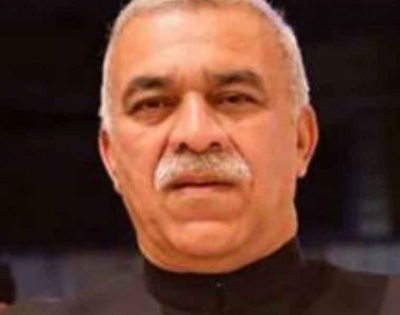
Nizam's grandson condemns BJP MP's remarks to rename Nizamabad as 'Indur'
Hyderabad, Jan 11 Nawab Najaf Ali Khan, one of the grandsons of seventh Nizam Mir Osman Ali Khan, on Sunday, condemned the alleged defamatory remarks made by the Bharatiya Janata Party (BJP) MP D. Arvind against the last ruler of Hyderabad State while demanding that the Nizamabad district be renamed as Indur.
Najaf Ali Khan termed the remarks of Nizamabad MP as "highly objectionable, condemnable, and unbecoming of a constitutional office-holder".
"The proposal to rename Nizamabad as Indur is a separate administrative matter. Dragging the name of Nizam VII, who passed away 58 years ago, into this issue reflects either historical ignorance or deliberate malice. Both are unacceptable," the Nizam's grandson said.
"Such language amounts to a reckless distortion of history and an insult not merely to an individual, but to the collective memory of the Nation," he said in a statement.
He added that Nizam VII's contributions to humanity, governance, infrastructure, education, health, and social harmony are well-documented and internationally acknowledged.
He served all communities without distinction of caste or religion and is remembered as one of the most secular rulers in Indian history, Najaf Ali Khan said.
"These are not opinions. These are historical facts. His reign from 1911 to 1947 constitutes a golden era that continues to endure in public memory. The peaceful coexistence of communities during this period widely known as 'Ganga-Jamuna Tehzeeb' stands in stark contrast to the divisive rhetoric being employed today. It is placed on record that Nizam VII did not rule with tyranny, nor did he exercise power in an arbitrary or cruel manner," he added.
He recalled that upon demise of Mir Osman Ali Khan on February 27, 1967, the state government itself issued an Extra-Ordinary Gazette, and hundreds of thousands of people from all religions attended his funeral, a clear testament to the respect he commanded across society.
"During his reign, the Nizamabad region was transformed into a major agricultural and industrial centre. The Nizam Sagar Dam, then the largest of its kind, was constructed across the Manjira River, irrigating vast stretches of land. The Nizam Sugar Factory, the largest sugar factory of its time, generated employment and economic stability. A railway network was established to connect Nizamabad with major cities of the dominion," he said.
"If any of these assets have since deteriorated or fallen into disuse, the responsibility lies squarely with successive ruling governments that failed to maintain them. Historical benefactors cannot be scapegoated for contemporary administrative failure," he added.
BJP MP Arvind had said on January 9 that if the BJP comes to power in the state, they would change the name of Nizamabad district to Indur.
He also added that a resolution to change the name of the district would be adopted in the first general body meeting of the Nizamabad Municipal Corporation before it being sent to the office of Telangana Chief Minister.
He exuded confidence that the BJP would secure a majority in the upcoming civic body polls in Nizamabad and would secure the post of the Mayor.
BJP MP Arvind claimed that Nizamabad's original name is Indur and was changed to later owing to a political decision.
Disclaimer: This post has been auto-published from an agency feed without any modifications to the text and has not been reviewed by an editor
Open in app