
PIL in SC seeks minimum wages, employee status for priests and staff in state-controlled temples
By ANI | Updated: May 10, 2026 10:40 IST2026-05-10T16:06:49+5:302026-05-10T10:40:03+5:30



New Delhi [India], May 10 : A Public Interest Litigation (PIL) has been filed in the Supreme Court seeking ...
PIL in SC seeks minimum wages, employee status for priests and staff in state-controlled temples
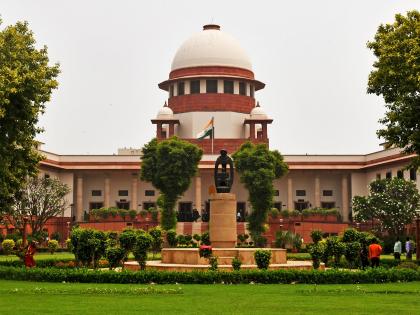
New Delhi [India], May 10 : A Public Interest Litigation (PIL) has been filed in the Supreme Court seeking directions to the Centre and States to constitute a Judicial Commission or Expert Committee to review the wages, service conditions and welfare benefits of priests, sevadars and temple staff working in State-controlled temples.
The petition has been filed by advocate and activist Ashwini Kumar Upadhyay under Article 32 of the Constitution.
The plea also seeks a declaration that priests, sevadars and temple staff should be treated as "employees" under Section 2(k) of the Code on Wages, 2019, making them entitled to minimum wages and other labour protections.
According to the petition, several States exercise administrative and financial control over temples through various HR&CE, Endowment and Devaswom laws, including control over appointments, service conditions and temple revenues, but priests and temple workers are allegedly denied minimum wages and social security benefits.
The petition claims that many priests and temple staff survive on "arbitrary honorariums" or dakshina-based payments ranging from Rs 1,000 to Rs 5,000 per month without pension, healthcare or wage protection.
The PIL states that the issue came to the petitioner's notice after he visited the Kashi Vishwanath Temple in Varanasi in April 2026 and allegedly learnt that priests and temple staff were not receiving wages sufficient for a dignified life.
Referring to protests by priests and temple staff in Andhra Pradesh and Telangana, the plea alleges that workers in several temples are not even getting the minimum wages prescribed for unskilled and semi-skilled labourers.
The petition further refers to a February 2025 circular issued by the Tamil Nadu HR&CE Department at the Dandayuthapani Swami Temple in Madurai, which allegedly prohibited priests from accepting dakshina in aarti plates. Although the circular was later withdrawn, the plea argues that it highlighted the economic vulnerability of priests dependent on offerings for survival.
The PIL cites observations of the Madras High Court that some temple staff were receiving salaries as low as Rs 750 per month, later revised to Rs 2,984, which the court had observed was insufficient for a dignified life.
The petition argues that once the State assumes administrative and financial control over temples, an employer-employee relationship arises between temple authorities and temple workers. It contends that denial of fair wages violates Articles 14 and 21 of the Constitution, as well as the Directive Principles under Articles 38, 39 and 43.
The plea also seeks directions to the Centre and States to take steps for the welfare of priests and temple workers in light of earlier judgments of the Allahabad High Court, Madras High Court and Himachal Pradesh High Court concerning temple staff welfare and temple funds.
Disclaimer: This post has been auto-published from an agency feed without any modifications to the text and has not been reviewed by an editor
Open in app