
PM Modi’s message on misuse of antibiotics timely: Experts
By IANS | Updated: December 29, 2025 11:45 IST2025-12-29T11:43:19+5:302025-12-29T11:45:10+5:30



New Delhi, Dec 29 Prime Minister Narendra Modi’s message against the misuse of antibiotics is timely and draws ...
PM Modi’s message on misuse of antibiotics timely: Experts
New Delhi, Dec 29 Prime Minister Narendra Modi’s message against the misuse of antibiotics is timely and draws attention to antimicrobial resistance (AMR) -- a very important health concern, said health experts on Monday.
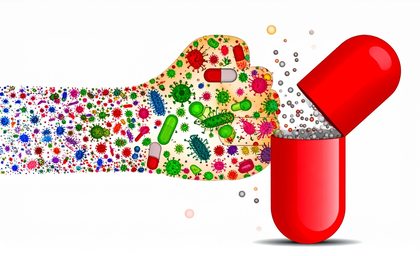
PM Modi, in his last 'Mann Ki Baat' of the year on Sunday, warned people against the misuse of antibiotics and raised the concern of rising levels of AMR in the country.
The Prime Minister cited a recent alarming report by the Indian Council of Medical Research (ICMR), which stated that antibiotics are becoming less effective against diseases such as pneumonia and UTIs in India.
Calling it “extremely worrying”, he urged people not to take antibiotics casually.
"Prime Minister Narendra Modi in Mann Ki Baat has brought the attention of the entire country to a very important issue, which is antimicrobial resistance," Rajiv Bahl, Director General of ICMR, told IANS.
"Antimicrobial resistance means that the bacteria that cause infections like pneumonia, urinary tract infections, or sepsis are now not reacting to or are not getting resistant to the antibiotics that we use to treat them. So we all thought earlier that we could treat any infection because we have antibiotics, but the bacteria are getting more resistant," he added.
Dr. Rajeev Jayadevan, Ex-President of IMA Cochin and Convener of the Research Cell, Kerala, called AMR a serious and silent threat that is looming over our healthcare system.
“It is a scary scenario where antibiotics become ineffective against bacteria. It is particularly important in the context where no new antibiotics are being added to our armamentarium. Since AMR by itself has no obvious symptoms such as pain or cough, most people are unaware of it. The Prime Minister’s comments are much needed to bring it to national attention,” he told IANS.
A recent report by the World Health Organization (WHO) showed that about one in three bacterial infections in India were resistant to commonly used antibiotics in 2023. Globally, it was one in six confirmed infections.
National AMR surveillance data also show troubling resistance patterns in pathogens such as E. coli, Klebsiella pneumoniae, Staphylococcus aureus, and Acinetobacter baumannii.
Another recent study, published in the Lancet eClinical Medicine journal, warned that India is at the epicentre of a superbug explosion as several patients in the country were found to carry multiple highly resistant organisms simultaneously.
It showed that more than 80 per cent of Indian patients carry multidrug-resistant organisms (MDROs) -- the highest globally.
“Prime Minister Narendra Modi’s message urging citizens to avoid self-medication and use antibiotics only on a doctor’s advice is a timely and powerful public-health intervention. He has brought national focus to AMR -- a quiet but catastrophic pandemic India cannot afford,” Dr Neeraj Nischal, Additional Professor in the Department of Medicine at AIIMS, Delhi, told IANS.
The expert explained that AMR does not require new germs; it thrives on bad habits like over-the-counter access, incomplete courses, unnecessary prescriptions, and use for viral illnesses.
“If we treat antibiotics as shortcuts, resistance becomes the long-term cost, paid in lives. Antibiotic misuse today means untreatable infections tomorrow, placing our country at a critical crossroads. Every avoidable prescription writes a future where easy-to-treat infections, routine surgery, childbirth, and cancer care become far riskier,” Nischal said.
Importantly, Jayadevan warned that the public should not assume that all cases of fever or cold require antibiotics.
The experts stated that individuals must avoid self-medication, using antibiotics like paracetamol or painkillers. They strongly recommend that antibiotics be used only when properly prescribed by a physician.
In cases where doctors recommend antibiotics, individuals must complete prescribed courses.
“Doctors must practice evidence-based prescribing and stewardship, while chemists must strictly enforce prescription-only sales. Government oversight is essential, particularly as quick-commerce platforms enable rapid antibiotic delivery, sometimes with hastily generated prescriptions,” Nischal told IANS, adding that combating AMR requires collective responsibility.
Disclaimer: This post has been auto-published from an agency feed without any modifications to the text and has not been reviewed by an editor
Open in app