
RS witnesses uproar as JP Nadda digs out Nehru's letters on Vande Mataram
By IANS | Updated: December 11, 2025 14:10 IST2025-12-11T14:09:03+5:302025-12-11T14:10:10+5:30



New Delhi, Dec 11 The Rajya Sabha on Thursday witnessed a charged debate over the national song Vande ...
RS witnesses uproar as JP Nadda digs out Nehru's letters on Vande Mataram
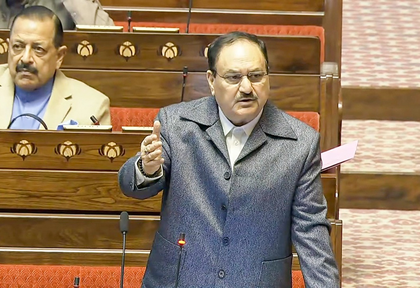
New Delhi, Dec 11 The Rajya Sabha on Thursday witnessed a charged debate over the national song Vande Mataram, with Leader of the House J.P. Nadda asserting that former Prime Minister Jawaharlal Nehru was responsible for altering the song under pressure from communal elements.
Nadda described Vande Mataram as a mantra of unity, recalling that freedom fighter Khudiram Bose’s last words, “Vande Mataram”, before his execution were the stirring cry of the song.
Responding to criticism from Congress leader Jairam Ramesh, who had alleged that the debate was aimed solely at defaming Nehru, Nadda insisted that the intention was not character assassination but to “set the record straight on history”.
He argued that leaders must accept responsibility for decisions taken during their tenure. “When you want, it becomes the Nehruvian age. When it doesn’t suit you, you bring in Subhas Chandra Bose and Rabindranath Tagore. If you want to take the glory, you should also take responsibility,” he said.
Nadda maintained that Vande Mataram did not receive the respect it deserved, and that Nehru, as the leader of the time, bore responsibility.
JP Nadda drew on historical records to argue that Nehru himself had been hesitant about the song’s adoption as a national symbol. He specifically referenced the 1937 Nehru Archives, where Nehru expressed discomfort with the religious imagery of the song, calling the homage to the mother goddess “absurd”. This was a striking choice of words, meant to underline Nehru’s unease with the blending of nationalism and religious symbolism.
Nadda also mentioned Nehru’s letter to Urdu writer Ali Sardar Jafri, in which Nehru criticised the song for containing “too many difficult words” that ordinary people would struggle to understand. This criticism was framed as evidence that Nehru believed the song lacked accessibility for the masses, despite its emotional resonance during the freedom struggle.
Finally, Nadda quoted Nehru’s assessment that Vande Mataram was “out of keeping with modern notions”. This phrase was used to suggest that Nehru saw the song as outdated or misaligned with the secular, modernist vision he wanted to project for India.
Opposition leader Mallikarjun Kharge challenged this, asking whether Nehru was Prime Minister in 1937? Nadda clarified that Nehru was then president of the Indian National Congress, and it was under his leadership that the song was modified.
Quoting from Congress Working Committee reports dated October 26 to November 1, 1937, Nadda said the resolution acknowledged objections raised by Muslim members. The committee decided that only the first two stanzas of Vande Mataram should be sung, as the remaining verses contained religious imagery invoking Bharat Mata as Maa Durga, wielding weapons of freedom.
“It was under Nehru’s influence that these stanzas were discarded,” Nadda declared.
Opposition members strongly protested, accusing Nadda of misleading the House. They argued that the debate was being used to politicise history rather than celebrate the unifying spirit of Vande Mataram.
Despite the uproar, Nadda stood firm, reiterating that the song symbolised sacrifice and unity, and deserved its rightful place in the nation’s consciousness.
Disclaimer: This post has been auto-published from an agency feed without any modifications to the text and has not been reviewed by an editor
Open in app