
Mumbai in Motion: Is the Infrastructure Re-shaping the City We Love?
By Impact Desk | Updated: December 24, 2025 20:24 IST2025-12-24T20:13:01+5:302025-12-24T20:24:22+5:30



For decades, India’s financial capital has been defined by its relentless pace- a city admired for its ambition, energy ...
Mumbai in Motion: Is the Infrastructure Re-shaping the City We Love?
For decades, India’s financial capital has been defined by its relentless pace- a city admired for its ambition, energy and dreams but endured for its congestion. The daily grind of packed trains and traffic-clogged roads, uncertainty in housing development was often seen as the price one paid for opportunity. Today, that narrative is beginning to shift.
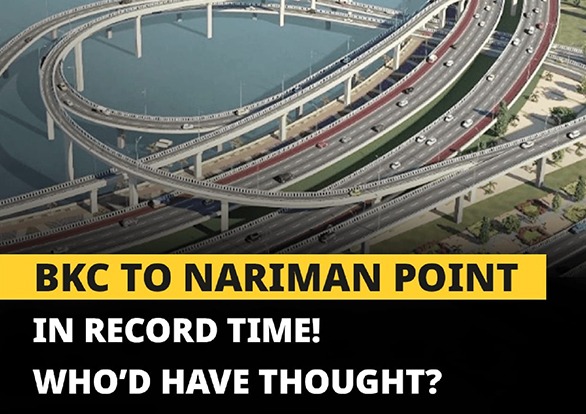
Projects like the Coastal Road, the Atal Setu and an expanding network of flyovers and connectors are transforming how Mumbaikars navigate the city. Long, draining commutes are steadily giving way to seamless corridors that stitch together neighbourhoods once divided by time and traffic. Projects like Coastal Road and Atal Setu, improved metro connectivity and addition of AC coaches in Mumbai local have made commute smoother and less time consuming, specially for officegoers who travel to South Bombay every day from as far as Virar and more.
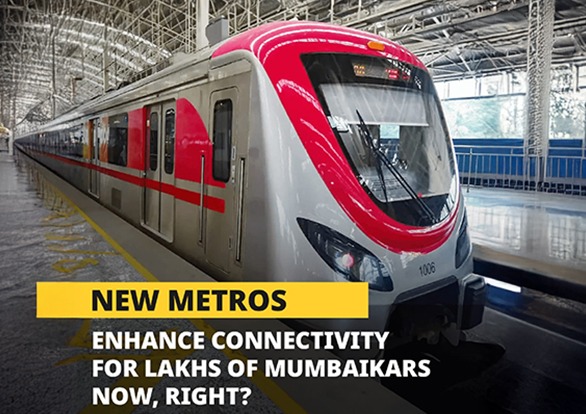
Rail and metro networks are reinforcing this shift. AC local trains and upgrades to suburban rail routes including the Uran rail corridor are redefining daily mobility. Digital ticketing through the UTS app means fewer queues, fewer delays and more reclaimed time. While several railway stations like Andheri, Borivali, among others have seen a complete transformation in terms of ramps, elevators, escalators and intra-bridge connectivity, a few junctions are undergoing upgradation.
What makes this evolution unique to Mumbai is how progress coexists with memory. Even as commuters swipe metro cards and glide through modern stations, the emotional connection to the city’s older rhythms remains intact. In the narrow lanes of Pydhonie, Bhuleshwar and Kalbadevi, handcarts still roll past heritage buildings; traders still greet familiar faces and old Bombay breathes alongside the new. The infrastructure may be modern, but the soul remains layered, lived-in and deeply human.
Improved highways, rail links and airports are also opening up opportunities. Faster access to business hubs, industrial zones and emerging districts is boosting job creation and economic mobility across the region.
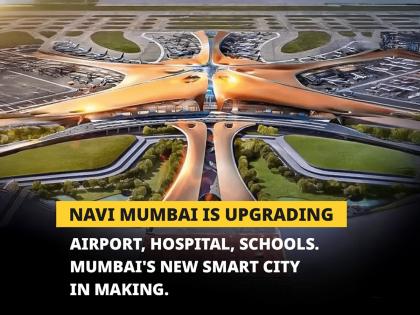
The Navi Mumbai International Airport, supported by new road, rail and harbour connectivity, is set to expand Mumbai’s reach not just globally, but across the wider metropolitan belt. And it is paramount to complete the ongoing projects like Borivali-Thane tunnel and Thane-Navi Mumbai road, on time to ensure smooth connectivity with the new airport. It is such developments that make the satellite city a potential part of the Mumbai 2.0. A well planned city that can decongest Mumbai by creating its own ecosystem, combined with improved connectivity allows people to have a quality life in an affordable and spacious housing.
Infrastructure upgrades are also reshaping how safe and assured the city feels. Better lighting, stronger surveillance and improved crowd management are building trust in public spaces, in housing and in the idea that the city is actively working for its people. It’s this sense of assurance that transforms a place you live in into a place you belong to.
And Mumbai’s story doesn’t stop at its current borders. Recent announcement by Chief Minister Devendra Fadnavis outlining the development of “Third Mumbai” between Navi Mumbai and Raigad districts, signal a bold new chapter — a long-term expansion of the Mumbai Metropolitan Region (MMR) designed to decongest the existing city while unlocking new centres for housing, employment and infrastructure-led growth. The vision is clear: Mumbai doesn’t end here. It evolves outward, smarter and more sustainable.
Mumbai’s transformation is ongoing. Roads are still being built, lines still being drawn, and connections are still taking shape. But the direction is unmistakable.
A few Indian cities can now offer the diversity of infra that Mumbai does, across road, rail, metro, ferry and air. Today, as infrastructure catches up with aspiration, Mumbai is not losing its edge — it is gaining balance. And in that balance lies a new possibility: a city that is not just built to survive in, but one that people can truly fall in love with. A city that makes you feel connected, included and inspired. Mumbai is far from finished. But one thing is clear: Mumbai isn’t just getting better. It’s becoming a city you don’t just live in but a city you love.
Open in app