
'Martyrs live forever': Gambhir pays homage to Jallianwala Bagh victims
By IANS | Updated: April 13, 2026 11:10 IST2026-04-13T11:08:35+5:302026-04-13T11:10:26+5:30



New Delhi, April 13 Team India’s head coach Gautam Gambhir paid a humble tribute on Monday to those ...
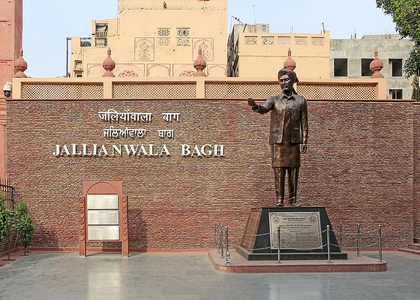
'Martyrs live forever': Gambhir pays homage to Jallianwala Bagh victims
New Delhi, April 13 Team India’s head coach Gautam Gambhir paid a humble tribute on Monday to those who lost their lives at Jallianwala Bagh. April 13, 2026, marks the 107th anniversary of the Jallianwala Bagh Massacre, a significant and dark chapter in India's struggle for independence and sovereignty.
Gambhir took to ‘X’ and penned a short statement, writing, “Martyrs live forever! #JallianwalaBagh”
Over a hundred years ago, on this day in 1919, the ruthless actions of British colonial authorities left a lasting impact on the Indian independence movement. This tragedy acted as a major wake-up call for the public, exposing the cruelty of foreign rule and permanently changing the course of the fight for freedom.
The incident occurred during the Baisakhi festival when thousands of unarmed men, women, and children gathered at Amritsar’s Jallianwala Bagh to celebrate the Sikh New Year. Unaware that the British administration had imposed Martial Law, banning public gatherings and enforcing strict curfews, this lack of communication resulted in a tragic event.
On April 13, 1919, while thousands were still gathered in the garden for the festivities, Colonel Reginald Dyer, the Acting Brigadier, arrived with his troops and immediately ordered them to open fire without warning or giving the crowd a chance to disperse.
Dyer’s forces, which included two armored cars with machine guns and Gurkha and Baluchi soldiers wielding Scinde rifles, continuously fired at the crowd for 10 to 15 minutes. A total of over 1,650 rounds of ammunition were fired at innocent people.
While the official reports later claimed 379 deaths and around 1,200 injuries, the true death toll is believed to be over 1,000, with many more wounded.
The massacre took place at Jallianwala Bagh, a walled garden surrounded on three sides by buildings. Its sole entrance was crowded with people, preventing any escape. This horrific event, also known as the Amritsar Massacre, was a shocking act of violence, marking a key moment in India’s struggle for independence.
--IANS
Disclaimer: This post has been auto-published from an agency feed without any modifications to the text and has not been reviewed by an editor
Open in app