
Infosys to Hire 20,000 Fresh Graduates in FY27 as AI Drives New Growth, Says CEO Salil Parekh
By Lokmat Times Desk | Updated: January 23, 2026 16:04 IST2026-01-23T16:03:26+5:302026-01-23T16:04:27+5:30



Leading Indian IT services firm Infosys plans to hire 20,000 graduates in the next financial year 2027, as it ...
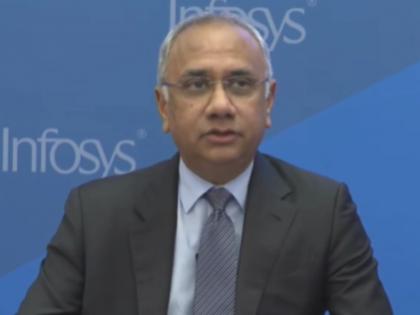
Infosys to Hire 20,000 Fresh Graduates in FY27 as AI Drives New Growth, Says CEO Salil Parekh
Leading Indian IT services firm Infosys plans to hire 20,000 graduates in the next financial year 2027, as it shifts its service portfolio towards areas driven by artificial intelligence (AI), CEO Salil Parekh said. Speaking to Moneycontrol on the sidelines of the World Economic Forum (WEF) annual meeting in Davos, Switzerland, Parekh said the hiring plan is already factored into the company’s strategy. The WEF meeting, being held from January 19 to 23, has drawn around 3,000 leaders from over 130 countries, including nearly 400 political leaders and about 850 CEOs.
“Infosys will hire 20,000 more college graduates between April 1, 2026, and March 31, 2027. This is already built into our plans,” Parekh said. He added that the company had already hired 18,000 fresh graduates in the first three quarters of FY26. Infosys’ net headcount rose by more than 5,000 employees during the third quarter of FY26, and the company expects to complete hiring a total of 20,000 graduates by the end of the current financial year.
Also Read | 76 pc Indian recruiters to create new jobs in H1 2026; healthcare, manufacturing to lead: Report.
Parekh said while certain segments of traditional IT services are facing pressure, demand is rising sharply in newer areas led by AI. “We see pressure in some areas and growth in others. Overall, we are seeing more growth than pressure,” he said.
According to the Infosys CEO, AI is creating fresh opportunities across software development, customer service, and the modernisation of legacy systems. He noted that the growing adoption of AI agents and foundation models is further accelerating demand, particularly in upgrading older systems and improving service delivery through automation.
Open in app