
AUM in passive investment in India surges to Rs 50 lakh crore in 2026: NSE Indices CEO
By ANI | Updated: April 9, 2026 20:00 IST2026-04-10T01:26:02+5:302026-04-09T20:00:20+5:30



By Saurav Mukherjee Mumbai (Maharashtra) [India], April 9 : NSE Indices on Thursday organised a press meet in Mumbai, ...
AUM in passive investment in India surges to Rs 50 lakh crore in 2026: NSE Indices CEO
By Saurav Mukherjee
Mumbai (Maharashtra) [India], April 9 : NSE Indices on Thursday organised a press meet in Mumbai, where it elaborated on its outlook for passive investing in India. It stated that the total Assets Under Management (AUM) in passive investments surged from Rs 1.63 lakh crore in 2020 to approximately Rs 50 lakh crore in 2026.
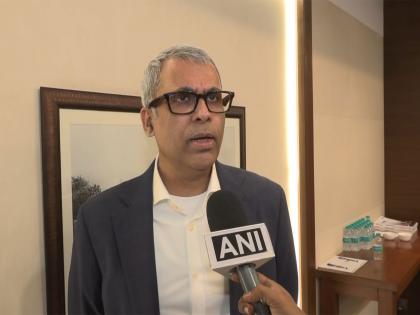
At the meet, Aniruddha Chatterjee, CEO of NSE Indices, discussed details regarding the evolution of index investing in India and the specific launch of the Nifty India FPI 150 Index.
Speaking to ANI, Chatterjee said, "Today, we believe that passive investment has become mainstream and has entered a phase where people view it as part of their overall financial solutions. It is our responsibility to provide a framework that investors can understand easily and transparently to effectively guide, channelise, and allocate their assets in a diversified manner."
On the differentiation between active and passive investing, Chatterjee added, "If you are investing in an active strategy, someone else is deciding which stocks to buy and sell. However, in a passive strategy, fund managers do not take a personal call; they simply replicate an index strategy that is available to them."
He further noted that because of the index's performance and construction, investors benefit from the ability to verify all information, which is readily available in the public domain. The NSE Indices CEO also mentioned that this gives investors the leverage to choose passive products that accurately track the particular market.
However, he also urged caution, stating that investors should understand the risks involved in any market investment and that passive investing should be viewed as a long-term approach.
When asked about the current number of passive investors in India, Chatterjee said, "I don't have the exact count of unique investors, but looking at the number of folios linked to passive investment funds, we have surpassed 50 million. There are more than 5 crore folios available in the country where investment is flowing into either ETFs or index funds."
Chatterjee also noted that the entire passive investment landscape has moved into a new phase.
Currently, the Nifty India FPI 150 Index comprises of the top 150 stocks from the Nifty 500, ensuring accessibility for foreign investors in India. These stocks are selected based on a six-month average foreign investible free-float market capitalization (M-Cap), covering the most liquid and high free-float stocks.
Meanwhile, the Indian passive funds industry continued to grow in January 2026, following strong investor participation.
A report released by NSE Indices at today's press meet stated that AUM rose to Rs 15.02 lakh crore, reflecting a healthy month-on-month increase of 5-8 per cent.
The industry also witnessed net investment inflows of Rs 39,073 crore, marking the 63rd consecutive month of positive flows. While a significant portion of the investment flowed into gold and silver ETFs, equity-orientated passive schemes attracted Rs 8,746 crore in net inflows.
NSE Indices' report also added that the number of passive fund folios has breached the 5-crore mark, underscoring the rapid adoption of ETFs and index funds. Passive investing is no longer a niche segment but is increasingly becoming an integral part of retail and institutional portfolios, the report concluded.
Disclaimer: This post has been auto-published from an agency feed without any modifications to the text and has not been reviewed by an editor
Open in app