
Home Interior Design Ideas: Why Your Home Feels Chaotic Even When It's Clean
By ANI | Updated: April 9, 2026 18:30 IST2026-04-09T23:58:22+5:302026-04-09T18:30:17+5:30



PNN New Delhi [India], April 9: Is there a specific kind of exhaustion that hits you the moment you ...
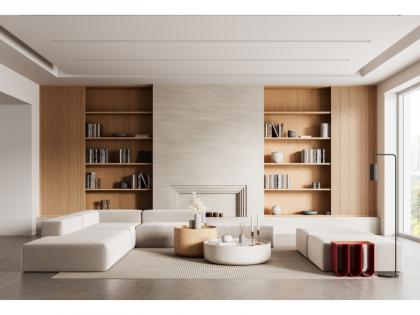
Home Interior Design Ideas: Why Your Home Feels Chaotic Even When It's Clean
PNN
New Delhi [India], April 9: Is there a specific kind of exhaustion that hits you the moment you walk through your own front door? Not physical tiredness, but more like a low buzz of being overwhelmed. Your eyes land on the side table with three weeks' worth of mail on it, then the shelf with more stuff than it was ever meant to hold. The room isn't dirty. It's just... a lot. And your brain, without you asking it to, has already started cataloging everything that feels unfinished.
Your house interior design is communicating with you constantly. And when it's sending too many signals at once, your nervous system pays the price. Avoiding interior design clutter is not about tidiness or minimalism as an aesthetic, but about reducing this visual noise that overwhelms you the moment you enter a room.
Visual Noise Is a Real Thing
'Visual noise' in the context of interior design is a catch-all term for everything in a space that competes for your attention without earning it. Your brain expends energy processing visual information even when you're not consciously looking at anything in particular. A cluttered room forces continuous low-level processing. Your brain keeps scanning, keeps registering, keeps running a background assessment of everything in its field of view. Over hours and days, that adds up to a kind of mental fatigue that feels inexplicable because you haven't technically done anything stressful.
Psychological Cost of Cluttered House Interior Design
It's worth being specific about what poor design actually does to how you feel day to day, because most people write off the connection between their home and their mental state as too abstract to take seriously.
Clutter increases anxiety. Visual disorder activates the same stress responses as other types of environmental factors, in a mild but persistent way. It's a low hum of unease that doesn't go away because the thing causing it is always present.
It creates decision fatigue, too, in ways that are easy to miss. Every time you look at a cluttered surface, your brain is making micro-decisions: should I deal with this? Where does this belong? Is that important? Those micro-decisions cost mental energy.
What Actually Creates Problems in House Interior Design?
Before jumping to solutions, it helps to identify the specific contributors to visual noise in most homes. Avoiding interior design clutter becomes much easier when you know what to look for.
Furniture
Let's go through who the wrong furniture can ruin your day:
- Overcrowded Furniture Arrangements: One of the biggest culprits, overcrowded furniture fill up the floor area and makes circulation feel tight
- Mismatch Between Space and Furniture Size: In compact 2BHK apartments, where space is limited, large furniture can feel suffocating rather than luxurious. Overly large furniture can drastically affect the room's aesthetics, visual clutter, and mood.
Colours
Colour plays a crucial role in adding to clutter:
- Competing Colours: Various colours and patterns competing in the same space can add to visual noise. The eye doesn't know where to settle, so it keeps moving, and that restlessness is tiring.
- Bold Colours in the Wrong Rooms: Bold colours, like bright red, can feel energising and increase brain activity. However, using such bold colours in the wrong rooms (like your bedroom) can quickly ruin the entire vibe of your space. Places dedicated to rest and relaxation should have calmer tones, and bolder tones can be reserved for workspaces instead.
Poor Storage
Here's how storage plays a crucial role:
- No Concealed Storage: Everyday items remain visible instead of being tucked away. This adds to visual noise, as your brain is constantly scanning your surroundings subconsiously.
- Visible Cables: Wires run along the floor with no system to hide or manage them is not only annoying to look at, but also a safety hazard.
- Unassigned Space for Materials: Books and papers pile up because there's no designated storage, especially in rooms designated for work or study. Not only does this clutter add to your anxiety, but it also distracts you from any task that needs your utmost concentration.
Zoning
Why are distinct zones a must for any house:
- Cluttered Transition Areas: Spaces like entryways, bedroom corners, and kitchen counters often collect items that don't have a proper place. These transitional spots tend to accumulate the most clutter and distractions.
- Lack of Boundries in Open Layouts: Without clear divisions, areas like the living room, kitchen, and balcony blend together without purpose. Good design needs to create clear transition points between connected spaces to maintain order and visual calm.
How Thoughtful House Interior Design Fixes This
The good news is that most of this is fixable without a complete overhaul. Good interior design is less about buying new things and more about making decisions about what stays, where it lives, and how it's stored.
Concealed Storage
Concealed storage is genuinely transformative. Cabinets with doors, a table with drawers, or a floor-to-ceiling built-in storage, all work towards reducing visible clutter. When things are behind doors, the visual field quiets down significantly. Concealed storage is especially useful in cramped Mumbai homes, where free space is hard to come by. Interior designers in Mumbai use transformative storage ideas to keep the clutter out of your sight, and out of your mind.
Cohesive Colour Palette
Colours in a room should belong to the same family, so the eye moves through the space rather than getting snagged on contrasts. A room with three or four tones that feel related will always feel calmer than one with five bold statements competing for attention.
Negative Space
Negative space is something most homeowners are deeply uncomfortable with because empty space feels like wasted space. However, negative space is not always a bad thing. A clear surface, a bare wall, a corner with nothing in it, gives the eye somewhere to rest.
Decluttering systems help maintain all of this, but they work better when the design supports them. If there's a natural, easy place to put something, it gets put there. If there isn't, it lands on the nearest surface and stays. Build storage and organisation logic into the design itself, rather than as an afterthought.
Why Zoning is an Underrated Aspect of House Interior Design
How you move through a house matters more than most people realise. When the path through a room is obstructed, your body registers friction even when your mind isn't focused on it. Good spatial flow means thinking about circulation first, before furniture placement.
For example, living rooms in Bangalore tend to have an open layout, with no clear partition between the living space and the kitchen. The best interior designers in Bangalore ensure that there is a clear path from the entrance to the seating area, from the seating area to the balcony or adjacent room, without having to navigate an obstacle course. In a bedroom, you should be able to move around the bed, reach the wardrobe, and get to the window comfortably.
Functional zoning works alongside this. A workspace that's visually separated from the rest of the living room lets the brain switch off from work mode when it's not in that zone. A reading chair tucked away from the main activity of the room becomes a cue for stillness. These house interior design ideas help define how a space is organised and experienced.
Why Personality is a Must for Good House Interior Design
None of this means your home should look like a show apartment with nothing personal in it. The goal of avoiding interior design clutter is not sterility; it's selectivity.
A home that feels calm and intentional can still have personality. It just means choosing fewer things more carefully rather than accumulating everything you like. Homes that feel genuinely effortless to be in are designed with deliberate choices in mind; choices such as what earns a place in the house and what doesn't. That selectivity is what creates calmness. And that calm is what makes a home feel like a sanctuary.
Bonito Designs' Principles
When it comes to house interior design, Bonito Designs emphasises your personal needs and desires, rather than simply following trends. Bonito Designs' LifeDesign philosophy is about considering your day-to-day routine and responsibilities during the design phase. This means your home's layout will not only look good but will also match your lifestyle! And this unity is essential if you want your home to be a relaxing and energising sanctuary, free of anxiety-inducing visual clutter.
Book a consultation with Bonito Designs to ensure that your house is personalized and perfected to your lifestyle.
(ADVERTORIAL DISCLAIMER: The above press release has been provided by PNN.will not be responsible in any way for the content of the same.)
Disclaimer: This post has been auto-published from an agency feed without any modifications to the text and has not been reviewed by an editor
Open in app