
IREF urges Finance Minister to boost rice exports, farmer incomes in Union Budget 2026
By ANI | Updated: January 3, 2026 14:15 IST2026-01-03T19:41:09+5:302026-01-03T14:15:03+5:30


New Delhi [India], January 3 : The Indian Rice Exporters' Federation (IREF) has urged the Union government to introduce ...
IREF urges Finance Minister to boost rice exports, farmer incomes in Union Budget 2026
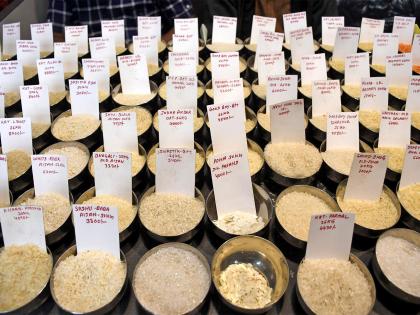
New Delhi [India], January 3 : The Indian Rice Exporters' Federation (IREF) has urged the Union government to introduce targeted fiscal and policy measures in Union Budget 2026 to bolster India's rice export ecosystem, covering both basmati and non-basmati segments.
In a formal representation to Union Finance Minister Nirmala Sitharaman, the federation highlighted the strategic importance of rice exports to India's economy, rural employment, and global food security.
"The rice sector faces ecological stress (notably groundwater depletion in major paddy belts), high fiscal costs of procurement and storage, and market/compliance volatility. Union Budget 2026 can strengthen competitiveness while improving sustainability and farmer outcomes through targeted fiscal and enabling measures," the federation said in its letter.
IREF has outlined a set of priority demands aimed at strengthening sustainability, competitiveness, and farmer incomes across the rice value chain.
It sought tax and investment incentives linked to verified water-saving and low-emission practices such as Alternate Wetting and Drying (AWD), Direct Seeded Rice (DSR), laser land levelling, and energy-efficient milling to address environmental stress and improve long-term productivity.
They also called for incentives to encourage farmers to move acreage towards premium basmati and GI-tagged, organic, and specialty non-basmati rice. This, they say, would enhance farmer realisation, promote market-led diversification, and reduce dependence on MSP-based procurement.
Further, to improve export competitiveness, the sector has asked for interest subvention on export credit to ease working-capital pressures, along with targeted freight and port facilitation measures to lower logistics costs.
It also urged the government to continue and appropriately calibrate the Remission of Duties and Taxes on Exported Products (RoDTEP) scheme for rice, ensuring embedded taxes are offset and export competitiveness is maintained.
Stakeholders have also highlighted the need to reinforce export finance guarantees and upgrade compliance infrastructure, including testing, traceability, and quality assurance systems, to safeguard India's reputation in premium international markets.
"These measures will directly lower exporters' costs, incentivize sustainability, and encourage scaling of value-added shipments. IREF requests that rice, as a key agri-export, be explicitly covered in relevant budgetary initiatives for export credit, logistics and trade facilitation," said Dr. Prem Garg National President, IREF in the letter.
As per the data highlighted by the IREF, India accounts for roughly 40% of global rice trade an exceptional level of dominance that India does not hold in any other commodity.
"Having met domestic food security requirements, India is structurally well placed to supply international markets at scale."
In FY2024-25, India exported about 20.1 million tonnes of rice to more than 170 countries.
Disclaimer: This post has been auto-published from an agency feed without any modifications to the text and has not been reviewed by an editor
Open in app