
“Line of Control”, a powerful cinematic adaptation of internationally acclaimed novel The Collaborator
By PNN | Updated: April 25, 2026 13:05 IST2026-04-25T18:31:06+5:302026-04-25T13:05:11+5:30



Mumbai (Maharashtra) [India], April 25: Some films open with spectacle. This one opens with stillness—and then quietly devastates you. ...
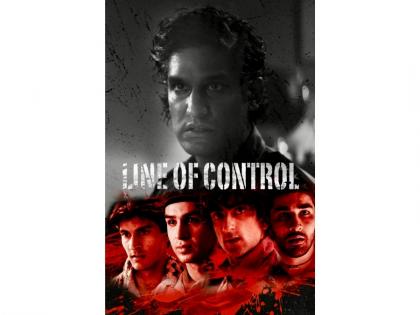
“Line of Control”, a powerful cinematic adaptation of internationally acclaimed novel The Collaborator
Mumbai (Maharashtra) [India], April 25: Some films open with spectacle. This one opens with stillness—and then quietly devastates you.
Adapted from The Collaborator by Mirza Waheed, the film resists the familiar grammar of war cinema. There are no immediate explosions, no swelling score to instruct you how to feel. Instead, a teenage boy stands in a field of flowers, framed by calm mountains. The colors are gentle, almost soothing—until the eye registers what lies scattered around him: bodies. The serenity becomes unbearable.
At the center is a nameless boy, played with remarkable restraint by Nikhil Singh Rai. Like in the novel, anonymity becomes a statement: he is one boy, but also many. Rai avoids theatrics, letting silence carry fear, confusion, and moral fracture. His performance feels less like acting and more like quiet endurance.
Before the violence closes in, the film gives us glimpses of ordinary life in the Kashmir valley. The boys, who call themselves the Famous Four, have innocent personal dreams. Hussain idolizes Mohammad Rafi and Ashfaq is a Rambo fan. Boy wants to be a writer. And Gul just wants to be married to someone he loves, and have lots of kids.
Set along the Line of Control in the 1990s, the story tightens when the Boy is forced into an unthinkable task. Under pressure from an Indian Army captain, he must collect ID cards from corpses in the valley. His father, cornered by fear, agrees—believing collaborating is the only way to keep his son safe. Each body the boy turns over carries the possibility of recognition: a neighbor, a classmate, a friend who disappeared.
The conflict here is not framed in easy binaries. The boy refuses both paths offered to him—he does not want to collaborate with the Army, nor does he want to cross the border and join militancy like his friends. He exists in a suspended moral space, trapped between choices that all demand a kind of death.
One of the film's boldest choices is a misc-en-scene sequence: a fifteen minute monologue in which the Captain interrogates the Boy, demanding the name of the guide in exchange for his life. It's a striking decision by Travis Hodgkins—to let the scene unfold with minimal interruption, relying almost entirely on performance and tension rather than editing. The Captain's questions are not just interrogative; they echo the doubts and fears the Boy has been wrestling with all along. Each demand—about loyalty, survival, truth—feels like an externalization of the boy's internal conflict. The scene becomes less about extracting information and more about exposing the psychological trap he's caught in.
Rudi Dharmalingam leans into the shifting tones of the captain—menacing, persuasive, almost intimate—while Nikhil Singh Rai holds his ground through silence.
What the narrative consistently avoids is overt political explanation. Instead, it focuses on lived consequences: villages hollowed out by absence, parents waiting for sons who won't return, young men pulled toward militancy in search of meaning, and a generation forced to grow up too quickly.
When the story edges toward revenge, there is no cathartic eruption, no grand reckoning. Instead, the film chooses something quieter, and far more difficult: the possibility—however fragile—of reclaiming one's humanity.
This is not a film that offers answers. It lingers in uncertainty, in silence, in the spaces where language fails. And long after it ends, that field of flowers—and what it reveals—stays with you.
Now available on Apple TV and YouTube TV.
Disclaimer: This post has been auto-published from an agency feed without any modifications to the text and has not been reviewed by an editor
Open in app