
Rail fractures reduced by 92 pc, weld failures down by 93 pc: Vaishnaw
By IANS | Updated: April 17, 2026 20:40 IST2026-04-17T20:35:54+5:302026-04-17T20:40:14+5:30



New Delhi, April 17 Rail fractures have declined by 92 per cent and weld failures by 93 per ...
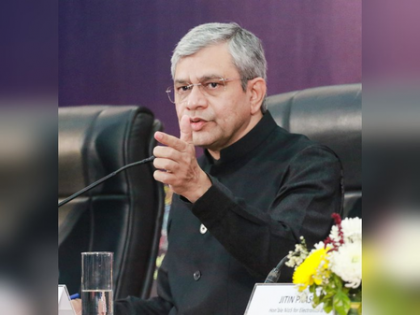
Rail fractures reduced by 92 pc, weld failures down by 93 pc: Vaishnaw
New Delhi, April 17 Rail fractures have declined by 92 per cent and weld failures by 93 per cent across Indian Railways -- marking a significant leap in track safety, Union Railway Minister Ashwini Vaishnaw said on Friday.
Writing in a national publication, Vaishnaw noted that these improvements are part of a broader structural transformation initiated after 2014, when a clear directive under Prime Minister Narendra Modi placed safety at the core of railway operations.
The minister emphasised that railway safety globally is assessed through fatalities or accidents per billion passenger-kilometres, enabling comparisons across countries.
While the European Union records approximately 0.09 fatalities per billion passenger-kilometres, India’s progress is reflected in its Consequential Accident Index, which has improved dramatically to 0.01.
According to Vaishnaw, this places India in a favourable position among large, complex rail systems worldwide.
He pointed to decade-on-decade data as the clearest evidence of systemic change. Consequential train accidents have fallen sharply from 135 in 2014–15 to just 16 in 2025–26, marking an 89 percent reduction.
At the same time, the accident index has declined from 0.11 to 0.01 -- indicating a structurally safer network even as train operations have expanded significantly.
Vaishnaw stressed that these gains are particularly noteworthy given the complexity of India’s railway system, where passenger, freight, suburban, and express services operate on shared tracks.
He described the transformation as not merely incremental but structural, driven by consistent funding, technological upgrades, and a long-term policy commitment to safety.
"India’s railway safety journey should be viewed not in terms of matching global benchmarks overnight, but through the pace and intent of its reforms -- an approach that is steadily positioning the country among leading international peers," Vaishnaw stated.
Disclaimer: This post has been auto-published from an agency feed without any modifications to the text and has not been reviewed by an editor
Open in app