
US-led "Most Disruptive" Hormuz blockade could jolt global economy, India to face inflation risks: PHDCCI
By ANI | Updated: April 16, 2026 16:10 IST2026-04-16T21:37:17+5:302026-04-16T16:10:25+5:30



New Delhi [India], April 16 : A complete blockade of the Strait of Hormuz would be the "most disruptive ...
US-led "Most Disruptive" Hormuz blockade could jolt global economy, India to face inflation risks: PHDCCI
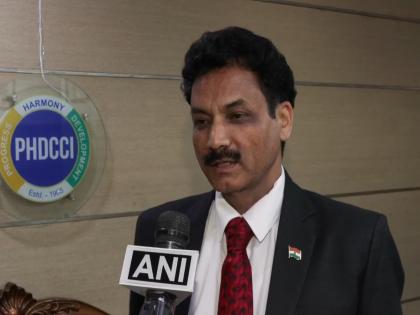
New Delhi [India], April 16 : A complete blockade of the Strait of Hormuz would be the "most disruptive geopolitical shock" to the global economy, with immediate implications for India through surging energy prices, rising inflation and supply chain disruptions, Ranjeet Mehta, CEO and Secretary General of PHDCCI, toldon Thursday.
"A blockade of the Strait of Hormuz will be the most disruptive geopolitical shock the world economy can ever have... this narrow passage handles around 20 to 30 per cent of the global energy supply," he said, warning that any disruption would sharply push up crude prices and trigger economy-wide cost pressures.
He said India would feel the impact almost immediately as higher energy prices would translate into increased logistics costs, disruptions in transport and supply chains, and a broader inflationary spiral.
"With energy prices, all other prices are connected; logistics costs will go up, and supply chains will be disrupted," he noted, adding that the Reserve Bank of India (RBI) would have "very little room" to manage inflation under such circumstances.
On the current inflation trajectory, Mehta said price levels remain under control for now. "As of now, there is not much of a problem... inflation is within manageable limits, it is below 4 per cent," he said, while cautioning that prolonged tensions in West Asia or any escalation around Hormuz could have "very serious implications for the world economy," with India unlikely to remain insulated.
Turning to the domestic outlook, he flagged risks from weather uncertainties after the India Meteorological Department (IMD) forecast a below-normal monsoon.
He said erratic or deficient rainfall could significantly impact agriculture, which remains heavily dependent on rain-fed irrigation.
"When monsoon is unusual or less, there will be less production, and that will impact the economy," he said.
He added that lower farm output would weaken rural demand in India's consumption-driven economy, affecting sectors such as fast-moving consumer goods (FMCG) and consumer durables.
At the same time, reduced supply would push up agricultural prices, leading to higher food inflation and an overall negative impact on economic growth.
In the tourism sector, Singh said PHDCCI's latest assessment shows mixed trends amid global uncertainties.
While tourism contributes around 8 per cent to India's GDP, inbound travel has been hit. "We have found around a 15 per cent drop in inbound tourism," he said, attributing it to geopolitical tensions. However, he noted that domestic tourism has picked up as travellers opt for local destinations over overseas trips.
Despite the challenges, Mehta expressed cautious optimism, pointing to ongoing diplomatic efforts.
"We are hopeful that with dialogues happening through diplomatic channels, the crisis will be over soon," he said.
Disclaimer: This post has been auto-published from an agency feed without any modifications to the text and has not been reviewed by an editor
Open in app