
Documentation barriers and fear blocking Pakistani women from accessing healthcare: Report
By IANS | Updated: January 10, 2026 18:35 IST2026-01-10T18:30:27+5:302026-01-10T18:35:13+5:30


Islamabad/New Delhi, Jan 10 More than poverty, lack of proper documents, fear, marginalisation, and gender are holding women ...
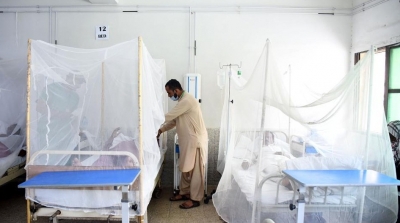
Documentation barriers and fear blocking Pakistani women from accessing healthcare: Report
Islamabad/New Delhi, Jan 10 More than poverty, lack of proper documents, fear, marginalisation, and gender are holding women in Pakistan away from accessing healthcare, according to a media report.
Writing in Dawn, Tahera Hasan, a lawyer and founder-CEO of Imkaan Welfare Organisation, shares that women in Pakistan are more likely than men to lack documentation. They are also more dependent on male relatives to obtain or even present it.
“The absence of identity documents interacts with restrictive social norms and institutional power imbalances to systematically exclude women from public services,” Hasan said.
“Insights from a community-based maternity home reveal that women’s avoidance of healthcare is less about awareness and more about fear, administrative exclusion, and the everyday costs -- financial, social, and emotional -- of navigating systems that were not designed with them in mind,” she added.
The report noted that when documents are missing, women face humiliation, especially in maternity settings, where, besides being refused care, they are “reported, questioned, or publicly shamed. Stories of such encounters circulate quickly within communities, reinforcing collective avoidance of formal healthcare”.
The reliance on traditional birth attendants, or dais, and home births remains widespread as institutional healthcare is frequently experienced as punitive rather than protective.
Home births are chosen more due to the fear of mistreatment within formal health facilities -- particularly in male-dominated, overcrowded public hospitals.
“Even where services are officially free... travel, repeated visits due to referrals, diagnostic tests, and the time spent away from household or income-generating work can make a single hospital visit a significant burden for low-income families. The cumulative impact of transport lost wages, and logistical challenges often makes seeking institutional care a difficult and sometimes untenable choice,” Hasan said.
On the other hand, private healthcare offers little relief with higher costs. There is also growing concern about the routine medicalisation of childbirth. Families report being pushed toward caesarean sections even when normal delivery is medically viable, the report said.
“Women do not avoid healthcare because they are careless or resistant to modern medicine. They avoid it because the system exposes them to indignity, financial strain, and administrative risk,” Hasan said.
She noted that awareness campaigns alone cannot address this; the need is to build a “health system design that recognises documentation as a barrier, addresses gendered power dynamics, and treats dignity as integral to care”.
Disclaimer: This post has been auto-published from an agency feed without any modifications to the text and has not been reviewed by an editor
Open in app