
Doctrine rejected by Pakistan during Op Sindoor now shapes its policy against Afghanistan: Report
By IANS | Updated: May 15, 2026 21:05 IST2026-05-15T21:01:21+5:302026-05-15T21:05:19+5:30



Washington, May 15 Pakistan’s accusations of militant sanctuaries and assertions of a right to conduct cross-border strikes against ...
Doctrine rejected by Pakistan during Op Sindoor now shapes its policy against Afghanistan: Report
Washington, May 15 Pakistan’s accusations of militant sanctuaries and assertions of a right to conduct cross-border strikes against Kabul are being made on weaker evidentiary grounds compared to India’s case in May 2025 during Operation Sindoor which was launched by the Indian military following the heinous Pahalgam terror attack carried out by a Pakistan-based terror group, a report has stated.
"A little over one year ago, India set down a doctrine that Pakistan denounced as illegitimate. Operation Sindoor, launched on the night of May 7, 2025, established that state support for terror could no longer hide behind plausible deniability. The operation followed a terrorist attack that killed 26 Indians in Pahalgam on April 22," a report in American magazine 'The National Interest' detailed.
"Pakistani officials rejected the argument wholesale, arguing that India had no right to act on accusations it could not prove. The following February, the Pakistan Air Force applied that same rationale against the Taliban government of Afghanistan, which it accused of sponsoring terror attacks in Pakistan. The doctrine Pakistan denounced when invoked against itself has become the doctrine it now invokes against Kabul," it added.
The report noted that the lasting significance of Operation Sindoor lay in its impact on the cost calculus of cross-border terrorism. India targeted nine sites in Pakistan linked to terror groups Lashkar-e-Taiba (LeT) and Jaish-e-Mohammed (JeM), including the LeT headquarters at Muridke and the JeM complex in Bahawalpur.
According to a report, the political doctrine articulated after the fighting paused on May 10 was unequivocal: future terror attacks originating from Pakistani soil would be treated as acts of war, with India determining its own response.
For three decades, it said, plausible deniability had served as the guiding principle of the Pakistani state’s engagement with terror networks.
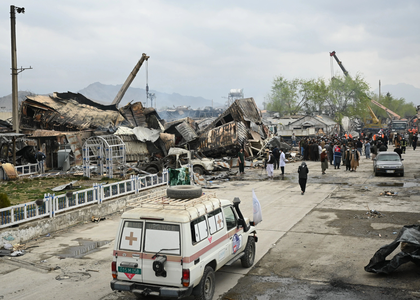
The report highlighted that Pakistani airstrikes on Nangarhar and Paktika on February 21 and 22 targeted Tehreek-e-Taliban Pakistan (TTP) camps in Afghanistan, with Pakistani Defence Minister Khawaja Asif declaring “open war” on Afghanistan on February 27. It added Pakistan’s Operation Ghazab lil Haq — military offensive against Afghanistan -- involved sustained air and artillery strikes across eastern Afghan provinces. Pakistani forces also targeted an Afghan university in the Asadabad region in Afghanistan in late April.
Citing the UN Special Rapporteur's report in March 2026, it noted that Pakistan could not provide credible evidence that TTP attacks inside its territory were directed or controlled by Afghan authorities. The International Court of Justice has long maintained that the “mere tolerance of armed groups by one state does not confer on a neighbouring state the right of self-defence."
"This is the legal architecture Islamabad dismissed when applied to Sindoor." It is now the architecture under which Pakistan operates,” it noted.
Disclaimer: This post has been auto-published from an agency feed without any modifications to the text and has not been reviewed by an editor
Open in app