
Growing Bangladesh-Pakistan ties could drive extremism and instability: Report
By IANS | Updated: December 11, 2025 21:10 IST2025-12-11T21:06:53+5:302025-12-11T21:10:17+5:30



Naypyidaw, Dec 11 The increasing military and strategic engagement between Bangladesh and Pakistan may contribute to a surge ...
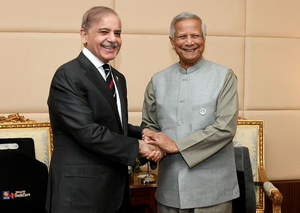
Growing Bangladesh-Pakistan ties could drive extremism and instability: Report
Naypyidaw, Dec 11 The increasing military and strategic engagement between Bangladesh and Pakistan may contribute to a surge in radicalism within both countries, intensifying existing security challenges, a report said on Thursday.
It added that amid rising religious extremism amid ongoing political instability under the Muhammad Yunus-led interim government, Bangladesh faces heightened risks with growing Pakistani influence.
Citing reports, Mekong News Myanmar mentioned that transnational extremist groups such as Pakistan-based organisations like Tehreek-e-Taliban Pakistan (TTP), Al-Qaeda in the Indian Subcontinent (AQIS), and Lashkar-e-Taiba (LeT), are taking advantage of Bangladesh’s current security vacuum to spread radical ideologies and recruit young people.
The renewed ties, it said, created fertile ground for these groups to expand their networks, propagate extremist narratives, and coordinate militant activities across borders.
“The recent heightened military interactions between Bangladesh and Pakistan signal a significant yet concerning shift in South Asia’s strategic scenario. Under the interim leadership in Dhaka and with the ouster of the Sheikh Hasina government in August 2024, Bangladesh appears to be recalibrating its foreign and defense policy, progressively tilting towards Pakistan. This pivot poses critical questions about Dhaka’s strategic autonomy, with growing apprehensions that Bangladesh might be unwittingly becoming a tool in Islamabad’s broader geopolitical designs,” the report detailed.
“The backdrop of these developments includes intensified defence dialogues, high-level military visits, and partnerships that diverge sharply from Bangladesh’s historically India-centric security approach. Adding another layer of complexity is the rumoured visit of Hafiz Saeed’s associate (HS) to the sensitive Indo-Bangladesh border, stirring alarms about regional security ramifications,” it added.
According to the report, the revived Bangladesh-Pakistan relationship is raising concerns in New Delhi, where the Indian government views the development as destabilising. India considers Pakistan’s involvement in Bangladesh as an effort to weaken the traditional Indo-Bangladesh partnership and erode strategic stability.
The report emphasised that the growing military interactions between Bangladesh and Pakistan go beyond a simple shift in defence diplomacy, reflecting evolving strategic currents that could reshape regional security dynamics.
“While Bangladesh aims to diversify its partnerships and assert an independent foreign policy post-Hasina, it risks becoming an unwitting instrument of Pakistan’s broader geopolitical ambitions. The visit of Hafiz Saeed’s associate to the Indo-Bangladesh border adds an ominous dimension, highlighting the security vulnerabilities that Bangladesh may inadvertently expose itself to through deeper engagement with Pakistan,” the report noted
Disclaimer: This post has been auto-published from an agency feed without any modifications to the text and has not been reviewed by an editor
Open in app