
Iran-US talks uncertain as Tehran refuses to join before ceasefire deadline
By IANS | Updated: April 21, 2026 23:30 IST2026-04-21T23:25:27+5:302026-04-21T23:30:44+5:30



New York, April 21 With the clock ticking on the tenuous ceasefire, the resumption of talks between Iran ...
Iran-US talks uncertain as Tehran refuses to join before ceasefire deadline
New York, April 21 With the clock ticking on the tenuous ceasefire, the resumption of talks between Iran and the United States was clouded by Tehran’s refusal to commit to participating in the negotiations as Tuesday drew to a close, even as President Donald Trump sounded confident it was on.
Leaving open the Strait of Hormuz, a chokepoint for 20 per cent of global oil and gas transport that has fuelled an economic crisis, hinges on the resumption of negotiations leading to a deal.
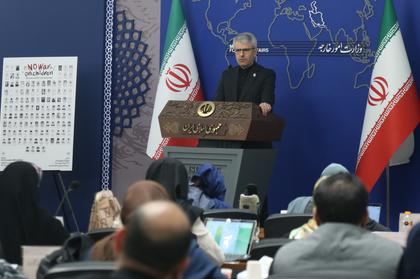
Senior Iranian officials quoted by Iranian media said that no delegation had gone to Islamabad and reiterated Parliament Speaker Mohammad Baqer Qalibaf’s assertion that talks would not take place.
“No delegation from Iran has gone to Islamabad, Pakistan; neither a main nor a subsidiary delegation; neither primary nor secondary,” IRIB news agency quoted senior officials as saying, according to Iran’s PressTV.
But reflecting his optimism, President Trump told an interviewer on CNBC that they had no choice but to send a delegation to the talks.
“What I think is that we’re going to end up with is a great deal,” he added, saying that Iran had no choice.
He said on Truth Social that Iranian leaders “will soon be in negotiations with my representatives”, adding an appeal to them to free eight Iranian women facing the death penalty.
But Vice President JD Vance, who was scheduled to leave for Islamabad on Tuesday morning to lead the United States side in the talks, delayed his departure, according to multiple United States media reports.
Even if the talks resumed, Trump indicated he did not want to extend the 14-day ceasefire, which ends at midnight at the latest.
He flatly told CNBC that he did not want to do that.
“I expect to be bombing because I think that’s a better attitude to go in with,” he said, referring to the talks.
The uncertainty over the resumption of talks has put Pakistan’s diplomacy at risk.
Pakistan’s Information Minister Attaullah Tarar said on X that, with the ceasefire scheduled to end in hours, Iran's decision to attend the talks before the end of the two-week ceasefire was critical.
He confirmed that Islamabad had not received confirmation of Iran’s participation and that it was in constant touch with Tehran.
The continuation of talks has been complicated by the United States seizure of an Iranian ship on Monday, after Iran reneged on an earlier announcement that it would open the Strait of Hormuz, and Washington imposed a blockade of Iranian ports.
Iran fired on two Indian ships in the Strait of Hormuz when the Islamic Revolutionary Guard Corps closed it.
Trump wants Iran to permanently drop any nuclear ambitions and give up any remnants of enriched uranium in the rubble of nuclear facilities bombed last year, as well as end missile programmes.
Tehran has opposed those conditions.
On the Iranian side, there appears to be a conflict between hardliners and moderates over how to deal with the United States.
After Foreign Minister Seyed Abbas Araghchi announced the Strait was open, the Islamic Revolutionary Guard Corps countermanded him, and Qalibaf, who had participated with him in talks with the United States on April 11, took a harder line on restarting negotiations.
Trump has been vacillating on his negotiating position, blowing hot and cold.
On Monday, he said he was offering Iran a better deal than it had received under an international agreement he had denounced as too conciliatory towards Tehran and scrapped in his first term.
In his CNBC interview on Tuesday, he said that Iran could get itself on a very good footing if it made a deal and could become a strong and wonderful nation again, adding that it had incredible people.
But he has also renewed on Truth Social his threat to obliterate Iran’s power grid and its bridge network if it did not agree to a deal.
Another contradictory message from Trump has been that Iran had agreed to the United States terms for a deal, which Iran has denied.
Trump faces domestic pressure to end the Iran war that he entered with assurances from Israeli Prime Minister Benjamin Netanyahu that it would end quickly.
But the Strait of Hormuz has added a new dimension, as its closure sent oil prices soaring, hitting even petrol pumps near the White House and raising the risk of domestic inflation ahead of the crucial mid-term elections to Congress.
Polls show that a majority of Americans are against the war, with a Reuters/Ipsos poll released on Monday showing that only 36 per cent supported it.
--IANS
Disclaimer: This post has been auto-published from an agency feed without any modifications to the text and has not been reviewed by an editor
Open in app