
Khaleda Zia's alliance with many political parties complicated ties with India: Former Bangladesh minister
By IANS | Updated: December 30, 2025 18:55 IST2025-12-30T18:51:55+5:302025-12-30T18:55:19+5:30


Dhaka, Dec 30 Bangladesh's former minister Mohibul Hasan Chowdhury has said that late Bangladesh Prime Minister Khaleda Zia's ...
Khaleda Zia's alliance with many political parties complicated ties with India: Former Bangladesh minister
Dhaka, Dec 30 Bangladesh's former minister Mohibul Hasan Chowdhury has said that late Bangladesh Prime Minister Khaleda Zia's political alliance with several political parties complicated the ties with India.
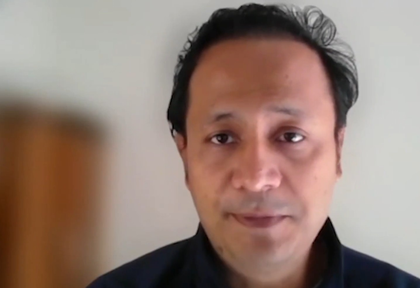
In an interview with IANS, Chowdhury paid tributes to Zia, who passed away early Tuesday morning in Dhaka after a prolonged illness at the age of 80. He, however, stated that the former PM made best efforts to keep the relationship with India smooth, however, she did not have control over the elements within the government, which had done considerable damage to Dhaka-New Delhi ties.
"Khaleda Zia's political alliance with many political parties complicated the relationship with India. In some ways, she probably did not have as much control on the governmental organs, which at times had taken some very damaging steps and decisions to help insurgents in India, especially in the northeast of India. But from what we understand is that she didn't always have full control over these elements within the government. But whenever she had the chance to, she wanted to reach out to Indian leadership and wanted to keep bilateral relationship smooth because she realised the geopolitics of Bangladesh and the geographic location of Bangladesh, that without India, as India is around us in every border, it is difficult for Bangladesh to survive economically," Chowdhury, who served as Bangladesh's Education Minister in Sheikh Hasina's cabinet, told IANS.
"She understood this reality. So, therefore, she herself personally did what she could best to keep the relationship with India smooth. But there were elements within her government perhaps on which she didn't have full control over, and they had done some damage in India-Bangladesh bilateral relationship. But, personally, she tried to reach out to Indian leadership always, and especially to Prime Minister Narendra Modi when he became Prime Minister in 2014. Khaleda Zia reached out to PM Modi and congratulated him and reached out and sought political friendship and joint collaboration with the party BJP. So, she was a realist when it comes to political decisions and bilateral relationship," he added.
Mohibul Hasan Chowdhury called Khaleda Zia "the most moderate voice" among the right-wing politicians of Bangladesh. Chowdhury praised Zia for keeping the economy running despite Bangladesh facing lot of poverty and natural disasters when she became the country's Prime Minister for the first time.
"Khaleda Zia was the most moderate voice amongst the right-wing politicians of Bangladesh in my view. She led the right-wing politics of the country, but she also understood geopolitics, bilateral relationship with different countries, and most importantly, she also understood that often the extreme political views are not acceptable when it comes to statecraft. So, in many ways, when she was the Prime Minister, despite having political alliance with political parties such as Jamaat-e-Islami, she managed to regulate them, contain them, and keep the country in the middle order, instead of turning it into a very Pakistan-style institutional theocracy. So, of course, her demise will be felt in the entire political ecosystem of Bangladesh and also given the fact that right now the country is gripped by some extremists in the country with the help of Professor Yunus, I feel that her demise is a political challenge for everyone involved," he said.
He mentioned that Khaleda Zia managed to continue empowerment of women despite having lot of religion-based political parties in her alliance. He stated that present generation in Bangladesh feels that the two political parties - Awami League and BNP should have reconciliation in order to fight the existentialist crisis faced by the country.
"Perhaps this generation, especially the urban youth, are not so aware of Khaleda Zia's first tenure as the Prime Minister, because, of course, it was a very difficult tenure. Bangladesh has turned from a military dictatorship into a democratic country in 1991, and she received public mandate. Opposition political parties were also very active and vibrant. Our political party was the biggest opposition party in the parliament. and during that time, the country, of course, also faced a lot of poverty, natural disasters, and she had managed to keep the economy running. She had some capable leadership in her cabinet, and together the country was on the right track to democratic transition as well as development."
The former Minister said that Zia did not compromise with the extremists when it came to the issue of empowerment of women and making sure that girls have equal access to boys in primary education, healthcare, etc.
"She's also seen by some as an uncompromising political leader while she was in opposition. These legacies will be remembered by this generation and most importantly, I think this generation feels that the two major political political streams of Bangladesh, one led by the Awami League, the other led by the BNP, should have some kind of reconciliation in order to fight the existentialist crisis that the country currently now faces. And they will feel that her absence in politics will make it a little more difficult. Because of her age, wisdom, and experience, perhaps she would have been a better candidate in order to achieve the reconciliation than the current generation."
Former Bangladesh Prime Minister Sheikh Hasina has also expressed her condolences over the death of Khaleda Zia.
"Our leader Sheikh Hasina has expressed her condolence and she had been very humane in the manner in which she had dealt with Khaleda Zia, despite several legal challenges, court issues and her cases. She had made sure that she received the best possible healthcare. In fact, Khaleda Zia's health deteriorated after Sheikh Hasina's ouster from government. Sheikh Hasina has arranged for a state-of-the-art medical healthcare facility for Khaleda Zia in one of the top hospitals of the country, invited foreign doctors into the country to operate on Khaleda Zia, which gave her a new lease of life."
"One of the reasons why she had lived, despite many health challenges, is because of those life-saving surgeries which were done with the clear instruction and order of the Prime Minister Sheikh Hasina. So, Sheikh Hasina had looked after Khaleda Zia in many ways, far more than what the political rivalry that we see, that people feel that they have. She had been very humane in the way she had dealt with Khaleda Zia. She was kept at her home, not in any kind of a prison cell. She received international medical healthcare while she was at home and also in the hospital," said Mohibul Hasan Chowdhury.
Disclaimer: This post has been auto-published from an agency feed without any modifications to the text and has not been reviewed by an editor
Open in app