
Lebanon not part of US-Iran truce deal: Israeli envoy (IANS interview)
By IANS | Updated: April 9, 2026 18:45 IST2026-04-09T18:45:32+5:302026-04-09T18:45:36+5:30



New Delhi, April 9 Asserting that Tehran is beaten and weaker than ever with its missile production machinery ...
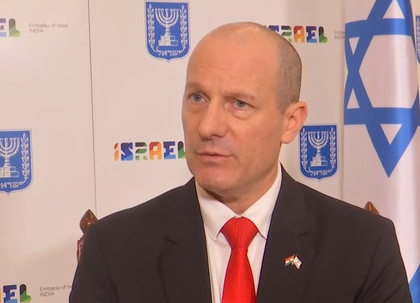
Lebanon not part of US-Iran truce deal: Israeli envoy (IANS interview)
New Delhi, April 9 Asserting that Tehran is beaten and weaker than ever with its missile production machinery destroyed completely, Reuven Azar, the Ambassador of Israel to India, on Thursday reiterated Israeli Prime Minister Benjamin Netanyahu's statement that Lebanon is not part of the ongoing two-week ceasefire between the United States and Iran.
Hours after the temporary truce was announced, Israel claimed of giving Hezbollah one of the biggest blows by attacking "100 targets in 10 minutes" with Netanyahu insisting that Lebanon was not part of the ceasefire deal.
"We have made this clear, and the American administration has confirmed it. We were attacked unilaterally by Hezbollah, that has violated not only this ceasefire but also terms that were signed last year. They were not supposed to operate in southern Lebanon. The Lebanese government committed to disarming them, but that has not happened. Therefore, we are defending ourselves, especially our border communities, which have been heavily targetted by Iranian missiles and anti-tank weaponry," Azar told IANS in an exclusive interview.
The Israeli envoy also spoke in detail about the current situation in the volatile region, ongoing peace efforts, Pakistan's role and India's constructive call for de-escalation, dialogue and diplomacy.
Excerpts:
IANS: Are you satisfied with the US-Iran ceasefire, or was it announced a bit early?
Reuven Azar: We are very satisfied. We have exhausted our military operation, and we are glad now that diplomacy will be given a chance again. We hope that this regime finally embraces the moment and decides to cooperate with the 15-point plan of President Trump. If that happens, not only will they receive relief, but the entire region will benefit. We sincerely hope that this happens. However, we stand ready in case they do not respect the ceasefire, or if they decide to again stall for time. We are prepared with our forces and will defend ourselves if they choose to resume hostilities.
IANS: Has Israel achieved its strategic objectives in Iran?
Reuven Azar: Absolutely. We have said at the outset that we had three goals. The first two were the removal of existential threats, mainly Iran’s military nuclear programme. We have struck hundreds of sites across Iran where nuclear activities were taking place, not just the Natanz facility but also heavy water reactors and plutonium-related infrastructure. We targetted scientists, research and development centres, and locations where they were planning to build the devices for nuclear weapons. This has been very successful. We have also significantly degraded Iran's missile capabilities and, more importantly, destroyed their production facilities, not only for ballistic missiles but also for drones and other weapon systems. Additionally, we dealt a heavy blow to their military ranks, eliminating more than 10,000 personnel from the military and the IRGC. We removed the top leadership of IRGC, including three chiefs of intelligence agencies. That means that we continue to have a very good view of what is going inside Iran and our intelligence agencies will be able to not only monitor but also help us take action if the Iranian regime decides to continue their campaign for aggression.
IANS: If there is any provocation by Iran, does Israel reserve the right to respond?
Reuven Azar: Absolutely. We are ready. Not only us, also the United States has stated that they are keeping the forces in the region to ensure diplomacy is properly utilised for a satisfactory outcome. Our goal is clear: removal of enriched uranium from Iranian soil, curbing their ballistic missile programme, and stopping all support for terrorism including financing, training, and transfer of weapons. If these conditions are met, Iran could receive sanctions relief, and the West Asian region could move toward a more peaceful future.
IANS: Is Lebanon part of a broader peace deal?
Reuven Azar: Absolutely not. We have made this clear, and the American administration has confirmed it. We were attacked unilaterally by Hezbollah, that has violated not only this ceasefire but also terms that were signed last year. They were not supposed to operate in southern Lebanon. The Lebanese government committed to disarming them, but that has not happened. Therefore, we are defending ourselves, especially our border communities, which have been heavily targetted by Iranian missiles and anti-tank weaponry.
IANS: Is Pakistan neutral or a party to the war?
Reuven Azar: We have not seen Pakistan participating in the war, but they have not been playing a positive role. The United States has chosen to use them as a facilitator for their own reasons. We trust the United States to implement the 15-point plan.
IANS: Has Iran's nuclear enrichment capability been destroyed?
Reuven Azar: Yes, absolutely. We have destroyed Iran's ability to produce nuclear weapons and set the programme back by years. We will continue monitoring the situation until enriched uranium is safely removed and enrichment activities stop. If Iran resumes the programme, we will defend ourselves from this threat.
IANS: Is there any indication of a regime change in Iran, as suggested by US President Donald Trump?
Reuven Azar: We are seeing cracks within the regime. There appears to be a lack of alignment between the IRGC and leadership. The regime has even invited foreign militias, suggesting weak internal support. Despite internet restrictions, there have been reports of people reacting positively to strikes against the regime. This indicates instability. We hope there will be change in or of the regime in the future.
IANS: How do you assess India's role in the Middle East crisis?
Reuven Azar: India is pursuing its interests. We are very pleased with our bilateral relations, especially after the visit of PM Narendra Modi to Israel, which resulted in many good results including agreements in defence, finance, infrastructure, technology, education and many more. We are encouraged by India's support for free maritime navigation. It is important that countries work together to uphold international law and prevent coercion in global waterways.
IANS: Has India become a reliable partner for Israel and the Gulf countries?
Reuven Azar: Yes. Iran's actions have brought many countries closer. People now understand how aggressive this regime is and they also understand that if Iran would have been allowed to execute these terrible threats against us then the situation would have been in a much worse condition. There is now greater awareness of the threat posed by the regime.
IANS: Is Iran supported by countries like China or Russia?
Reuven Azar: We have not seen direct military support. There might have been support that we haven't seen. What we know is that many of the raw materials that the ballistic missile industry of Iran has been enjoying was coming from places like China. We believe stricter sanctions are necessary to prevent such support.
IANS: Will the war restart after two weeks, or could there be a permanent ceasefire?
Reuven Azar: We hope for a permanent ceasefire. We hope diplomacy prevails. We have seen enough violence and prefer not to return to military action.
IANS: With regard to the Israeli strikes, China has said Lebanon's sovereignty should not be violated. Your view?
Reuven Azar: The Lebanese government should ensure its own sovereignty. Unfortunately, it has not done so and has allowed Hezbollah to continue attacks. As long as that continues, Israel will defend itself.
Disclaimer: This post has been auto-published from an agency feed without any modifications to the text and has not been reviewed by an editor
Open in app