
Operation Sindoor demolished Pakistan’s 'reliable and battle-ready' defence systems: Report
By IANS | Updated: May 7, 2026 21:10 IST2026-05-07T21:05:52+5:302026-05-07T21:10:15+5:30



Kabul, May 7 Pakistan's defence systems fell below expectations when they were tested against real-time targeting, integrated air ...
Operation Sindoor demolished Pakistan’s 'reliable and battle-ready' defence systems: Report
Kabul, May 7 Pakistan's defence systems fell below expectations when they were tested against real-time targeting, integrated air defence and electronic warfare during India's Operation Sindoor last year, a report has detailed.
It stated that India’s Operation Sindoor was the “clearest example” of how Pakistan's defence systems fell below confidence.
“While modern air defence networks do not need to intercept everything, they are expected to protect core military nodes from repeated, coordinated strikes. During Operation Sindoor, it failed to do so,” Afghan Diaspora Network reported highlighting the extensive damage at airfields, hangars and radars in Pakistan due to the Indian strikes.
The report mentioned that Pakistan's HQ-9 long-range surface-to-air system underperformed significantly. It was marketed as a high-end Chinese answer to Western and Russian systems and should have complicated Indian air operations and protected strategic air bases.
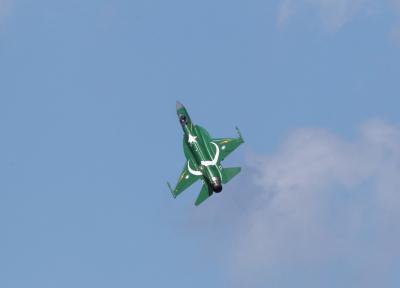
The JF-17 multirole fighter aircraft, jointly developed by Pakistan and China, also came out with a weaker reputation than what Islamabad had suggested, as it was not able to prevent Indian strikes on sensitive military sites and did not demonstrate any comparable visible damage on Indian air bases after the early air battle, the report added.
“For a platform sold as the backbone of Pakistan’s affordable airpower, that is not a convincing battlefield result,” it stated.
The J-10C multirole combat aircraft and PL-15 beyond-visual-range air-to-air missile (BVRAAM) also did not show any conclusive evidence of tactical success. The Pakistani side of the story’s evidence was not shared in the international media, the report highlighted.
It also said that “the J-10C’s alleged 'tactical success' has not yet translated into broad export success,” citing the Pentagon’s 2025 China military report, which stated that Pakistan remained the only export customer for the J-10C.
Pakistan, the report detailed, has served as a "reliable laboratory" for testing Chinese equipment and faced the consequences of its failures.
The report concluded that persistent credibility gaps are faced by Pakistan’s military equipment in international markets. Operation Sindoor, it mentioned, damaged more than individual systems and demolished Pakistan’s claim that its defence system is "reliable" and "battle-ready".
Disclaimer: This post has been auto-published from an agency feed without any modifications to the text and has not been reviewed by an editor
Open in app