
Takaichi's hardline Taiwan stance fuels China tensions, policy concerns in Japan
By ANI | Updated: January 3, 2026 14:55 IST2026-01-03T20:23:04+5:302026-01-03T14:55:08+5:30


Tokyo [Japan], January 3 : Prime Minister Sanae Takaichi's comments on Japan's potential role in a Taiwan emergency have ...
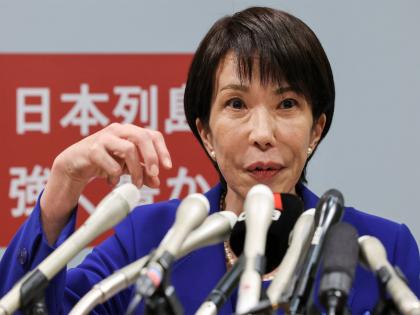
Takaichi's hardline Taiwan stance fuels China tensions, policy concerns in Japan
Tokyo [Japan], January 3 : Prime Minister Sanae Takaichi's comments on Japan's potential role in a Taiwan emergency have fuelled tensions with China and raised concerns that the lack of moderating voices around her could leave her hardline positions largely unchecked, Kyodo News reported.
With senior moderates within the ruling Liberal Democratic Party (LDP) and a centrist coalition partner distancing themselves from Takaichi, doubts are growing about her ability to manage diplomacy beyond China and coordinate broader economic and social policies, according to Kyodo News.
An opposition lawmaker warned that Takaichi's decision to form a coalition with a conservative party ahead of becoming Japan's first female prime minister on October 21 "has left few remaining checks on her hardline course."
Takaichi is widely seen as the political heir to former prime minister Shinzo Abe, who was assassinated in 2022 and whose firm security stance she admires. However, the lawmaker said Abe was "more skilled" at building consensus through dialogue.
Less than a week after Takaichi won the LDP's presidential election on October 4, the Komeito party ended its 26-year alliance with the LDP, citing frustration over its response to political funds scandals, Kyodo News reported.
Komeito, backed by the Soka Gakkai Buddhist organisation, has traditionally maintained amicable ties with the ruling Chinese Communist Party by emphasising dialogue and serving as an informal communication channel during periods of strained relations.
Beijing has previously praised the late Daisaku Ikeda, Komeito's founder, for advocating early normalisation of Japan-China ties well before diplomatic relations were formally established in 1972.
Political observers say Takaichi now lacks advisers well versed in China affairs, with figures such as former LDP secretary general Hiroshi Moriyama no longer part of her inner circle.
In 2025, Moriyama, as head of a cross-party group tasked with stabilising relations with China, helped persuade Beijing to resume imports of Japanese food products. Some of those imports have since been suspended again following Takaichi's comments on Taiwan, Kyodo News reported.
On the economic front, Takaichi has appointed Cabinet members who share her belief in expansionary spending to drive growth, while sidelining calls to curb government bond issuance to protect fiscal credibility.
As her ruling bloc holds only a slim majority in the House of Representatives and lacks a majority in the House of Councillors, she has sought backing from the Democratic Party for the People, a fiscally dovish opposition group.
Before Komeito announced its departure from the coalition, Nomura Research Institute economist Takahide Kiuchi said such a move would give the LDP "greater leeway" in shaping policy.
However, analysts warn that decisions driven solely by like-minded aides could complicate diplomacy and weigh on economic growth.
Takaichi's repeated pledge to strengthen Japan's defence has drawn criticism from China and some quarters in South Korea, even as Tokyo and Seoul have improved ties at the leadership level.
Political commentator Harumi Arima said that as lawmakers with wartime experience have declined and Komeito has left the government, restraints on boosting defence capabilities have eroded.
A government source told Kyodo News that Takaichi may struggle to handle complex issues with the same finesse as Abe, citing shortcomings in political judgement and policy delivery.
Abe, though pro-Taiwan, visited mainland China on his first overseas trip as prime minister to repair relations and relied on Komeito and China-friendly figures such as Toshihiro Nikai to manage ties during periods of tension.
Differences between the LDP and Komeito also existed under Abe on economic policy, but compromises were reached through repeated consultations.
In contrast, a government source said Takaichi is "unilaterally pro-Taiwan, and even looking at her personal networks, there appears to be no one around her willing to voice opposing views."
"She does not seem capable of formulating policies through adequate communication," the source added.
Takaichi has also refrained from discouraging senior LDP lawmakers from visiting Taiwan even after angering Beijing by suggesting Japan could exercise its right to collective self-defence if China uses force against the self-ruled island.
Opposition leader Ichiro Ozawa criticised her approach, accusing her of "pouring fuel on the fire under the circumstances."
"Is she trying to make the situation worse? Can Prime Minister Takaichi really be trusted to make sound judgments?" Ozawa asked on social media, according to Kyodo News.
Disclaimer: This post has been auto-published from an agency feed without any modifications to the text and has not been reviewed by an editor
Open in app