
Ukraine has become 'loss-making asset' in America's geopolitical portfolio: Expert
By IANS | Updated: December 29, 2025 16:50 IST2025-12-29T16:48:55+5:302025-12-29T16:50:21+5:30


New Delhi, Dec 29 Among the US President Donald Trump's biggest surprises this year has been Washington's change ...
Ukraine has become 'loss-making asset' in America's geopolitical portfolio: Expert
New Delhi, Dec 29 Among the US President Donald Trump's biggest surprises this year has been Washington's change of course on Ukraine, said one of Russia's prominent figures in international relations and political science, perhaps reflecting a global majoritarian view.
Writing for the RT website of the state-controlled international news television network formerly known as Russia Today, Ivan Timofeev, the Director General of the Russian International Affairs Council and member of Valdai Discussion Club, also commended India's resilience in face of US tariff pressure.
The Valdai Discussion Club is a non-profit Russian think-tank and international discussion platform.
Commenting on the "sharp shifts" triggered by Trump after his return to the White House" in January, Timofeev said, "The US has moved from being Kiev's closest political patron to a calculating actor focused squarely on its own interests."
Underscoring the tectonic shift since the last regime, he said, "The rhetoric of Russia's 'unconditional defeat' has been discarded in favour of negotiations and compromise. If Ukraine has become a loss-making asset in America's geopolitical portfolio, Trump has signalled, then the loss must be recognised."
While admitting that though the shift, comprising "a series of gestures that shocked many Western observers" has not yet resolved the conflict, "but the door to diplomacy has been left ajar. Moscow supports negotiations, but does not intend to retreat from its positions," he asserted.
He began saying that if there were a competition for "Breaking the Mould of the Year", the US would be "the runaway winner in 2025".
The international relations expert also mentioned "Trump's decision to launch a trade war against more than seventy countries" as "another dramatic break with past practice".
"While China responded with serious counter-measures, like retaliatory tariffs and strengthening Beijing's negotiating hand by introducing export controls on rare-earth metals vital to the US economy, while at the same time seeking a negotiated de-escalation," he said.
"India also refused to bend. US tariffs on its purchases of Russian oil barely affected Delhi's stance. The same is broadly true of Brazil. In several cases Washington applied tariffs for openly political reasons, even where the trade balance was to its advantage," he added.
Commenting further on the shifting sands within White House, Timofeev said that Trump's trade measures "increasingly took on the character of sanctions", which were on occasions "accompanied by military strikes, although the White House avoided sliding into a full-scale confrontation with Iran".
He further pointed to "the most unexpected development" being deepening estrangement between the US and its traditional allies where "Trump's revived talk of buying Greenland, part of Denmark, was symbolic in that respect".
He referred to US Vice-President J.D. Vance's earlier criticism of European democracy, and early December's new US National Security Strategy that "urges Western Europe to return to its civilisational roots, warns of the risks of war with Russia, and casts Washington less as a belligerent and more as a mediator. Even the EU has found itself targeted by American tariffs".
The article largely reiterates Moscow's current stand amidst its war in Ukraine.
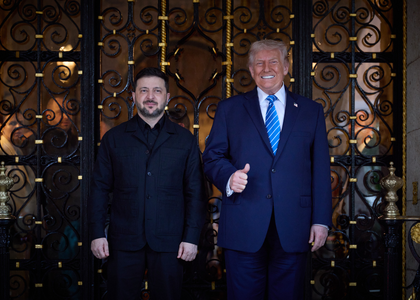
It also coincided with Ukraine's President Volodymyr Zelensky's US visit where he wanted President Trump's backing for a revised 20-point peace plan.
Incidentally, after more than three hours of talks in Florida, neither leader announced any major breakthrough.
Interestingly, Trump spoke over phone with Russian President Vladimir Putin ahead of his meeting with Zelensky.
A Kremlin Foreign Policy Aide described the telephonic discussion as a "friendly, well-wishing and business-like" conversation for an hour and 15 minutes, where Putin stressed the need to rely on the understandings reached between the Presidents at the summit in Alaska earlier this year.
Disclaimer: This post has been auto-published from an agency feed without any modifications to the text and has not been reviewed by an editor
Open in app