
"US-Iran talks without progress may indicate possibility of another attack," says Foreign Affairs expert Robinder Sachdev
By ANI | Updated: April 27, 2026 14:40 IST2026-04-27T20:06:12+5:302026-04-27T14:40:12+5:30



New Delhi [India], April 27 : Foreign Affairs Expert Robinder Sachdev on Monday said that as Iran is reaching ...
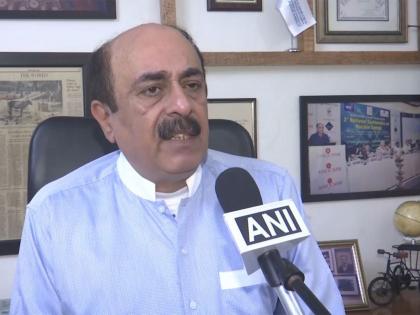
"US-Iran talks without progress may indicate possibility of another attack," says Foreign Affairs expert Robinder Sachdev
New Delhi [India], April 27 : Foreign Affairs Expert Robinder Sachdev on Monday said that as Iran is reaching out to a newer set of its allies, including Russia.
Sachdev, while speaking to ANI, said that there could be another attack on Iran if the talks go on without any solution.
"If these negotiations continue to stretch out without progress, there is a real possibility of another attack on Iran. As of now, the discussions seem to be going in circles. The United States could grow tired of the delay, and key players like Netanyahu may pressure the Americans to push for an attack to obliterate the regime. Unfortunately, this may simply be the lull before the storm, potentially leading to a massive attack by the United States and Israel in the coming days," he said.
He pondered if Iran's Foreign Minister Abbas Araghchi's multi nation tour is a harbinger of potential change in current geopolitical landscape.
"Iran is currently engaging in swing diplomacy, reaching out to its allies like Pakistan and Oman. The Iranian Foreign Minister recently visited Pakistan, then Oman, returned to Pakistan, and has now gone to Russia. These visits raise questions about the current geopolitical landscape and the specific role Russia might play in these developments," he said.
Sachdev said that Russia's role remains shrouded but earlier during a nuclear deal, it airlifted tons of uranium from Iran.
"The exact role of Russia remains uncertain, but they historically played a significant part in the previous nuclear deal with the West, during which approximately 12.5 tons of Iranian uranium was airlifted to Russia. Beyond this historical linkage, these visits likely aim to fortify Iran's strategic relations with Russia. Given the threat of an impending war, this support could involve technology, ammunition, or further strategic backing from Russia, in addition to discussions regarding an overall ceasefire," he said.
Sachdev further said that Trump just wants the 'trophy', i.e. Iran's uranium to create an impact like he did with Venezuelan leader Nicholas Maduro.
"The crux of the matter appears to be the "trophy" that Trump wants: the enriched uranium currently held by Iran. He seeks a visible symbol of success, much like his spectacular actions regarding Maduro, so he can clearly claim victory. Iran, however, is adamant about not giving up its uranium. While they relocated uranium during the Obama-era deal pursuant to diplomatic talks, doing so now would be viewed as a surrender in a time of war. Because of this, many of the current discussions seem to be beating around the bush," he said.
Sachdev further said that Iran has proposed focusing on the opening of the Strait of Hormuz before discussing nuclear weapons.
"Iran has proposed focusing on the opening of the Strait of Hormuz before discussing nuclear weapons. From Iran's perspective, this is a logical move. They would be willing to open the Strait as long as the United States lifts its blockade, allowing the flow of shipping to resume and the world economy to recover. Under this scenario, a ceasefire would begin, but Iran's enriched uranium would remain within its borders. This allows supply lines to flow again, but it leaves the United States without the removal of the uranium it seeks," he said.
Sachdev then said that further issues that are sticking points in the deal- are Iran demanding reparations for damage, and its missile program.
"Other significant issues remain, such as Iran's missile program and their claims for compensation. The extent to which Iran can continue testing and developing long-distance missiles remains a major sticking point. If a compromise is reached only regarding the Strait of Hormuz, Iran would maintain the upper hand in this complex game of chess," he said.
Meanwhile, Iranian Foreign Minister Abbas Araghchi has communicated a definitive list of Tehran's "red lines" to be passed to the United States during his recent diplomatic mission to Pakistan, according to Iranian state media outlet Fars.
Disclaimer: This post has been auto-published from an agency feed without any modifications to the text and has not been reviewed by an editor
Open in app