
US sees stable China trade, flags WTO crisis
By IANS | Updated: April 8, 2026 06:40 IST2026-04-08T06:39:04+5:302026-04-08T06:40:19+5:30



Washington, April 8 The United States has described its trade relationship with China as “stable” while warning that ...
US sees stable China trade, flags WTO crisis
Washington, April 8 The United States has described its trade relationship with China as “stable” while warning that the global trading system risks becoming “less relevant” if reforms are not undertaken, US Trade Representative Jamieson Greer said.
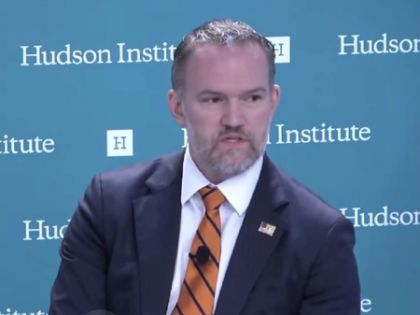
Speaking at the Hudson Institute on Tuesday (local time), Greer said Washington is maintaining a cautious balance with Beijing, avoiding escalation while protecting economic and national security interests.
“Right now, the United States and China, I would characterise our economic and trade relationship as stable,” he said. “What we are not looking for is massive confrontation.”
At the same time, he underlined that the US continues to impose “substantial tariffs on Chinese goods,” particularly in advanced manufacturing sectors, as part of efforts to address a “huge trade deficit that's exploded.”
Greer noted that the US goods trade deficit with China fell by $130 billion last year, a 30 per cent decline, calling it evidence of “real change.” He added that Washington is also seeking to secure supply chains, including access to rare earth materials, which remain central to ongoing discussions with Beijing.
“We almost always talk about rare earth with the Chinese,” he said, adding that the US is also pursuing domestic self-sufficiency and partnerships to reduce dependence.
In response to a question, Greer also flagged supply chain vulnerabilities in pharmaceuticals, noting that while India remains a major supplier of active pharmaceutical ingredients, critical raw materials often originate in China.
“People will say, well, we get a lot of our APIs from India. That may be true, but the key starting materials, they're getting from China,” he said, adding, “I've had a lot of conversations with the Indians about how to square this circle.”
On the broader global trade architecture, Greer delivered a sharp critique of the World Trade Organization (WTO), warning that its inability to adapt could marginalise it further.
“If the WTO fails to adjust… the consequences are that the WTO becomes even less relevant than it already is,” he said.
He pointed to the recent ministerial meeting in Cameroon, where countries failed to agree on extending a long-standing moratorium on tariffs on digital goods.
Calling the issue a “litmus test,” Greer said the US had proposed making the moratorium permanent or extending it for four years, but “Brazil and Turkey… just couldn't bring themselves to do it.”
“This is just a symbol of how backwards the WTO is,” he said.
Greer also highlighted structural imbalances in global trade, particularly excess production capacity driven by state-backed economies.
“We’ve initiated a Section 301 investigation on structural overcapacity,” he said, noting that while China is “at the root,” other countries also contribute to the problem.
The US, he said, is responding through tariffs and bilateral agreements aimed at controlling imports while expanding exports. He pointed to record US exports exceeding $300 billion in January and February this year.
On trade policy more broadly, Greer said the administration is focusing on revitalising domestic manufacturing, citing improvements in productivity, wages, and factory construction.
“All of these indicators have been going exactly in the right direction,” he said, adding that manufacturing jobs returned to positive growth in February after a prolonged decline.
He stressed that trade policy is only one part of a broader strategy that includes tax, energy, and regulatory measures.
Greer also flagged tensions with the European Union over digital trade rules, warning that US firms face “discriminatory” regulations under measures such as the Digital Markets Act.
“We’re not fooled,” he said, arguing that such rules disproportionately affect American technology companies. “If American companies don’t have that opportunity, then we will control European service providers in the United States.”
On North America, Greer indicated that changes to the US-Mexico-Canada Agreement (USMCA) are likely, saying the administration is “dissatisfied with a lot of the outcomes.”
“Almost everyone suggested changes to the agreement,” he said, adding that Washington may pursue separate protocols with Canada and Mexico to address country-specific issues.
The remarks come amid a broader push by the Trump administration to reshape trade policy, prioritising domestic industry, supply chain security, and reciprocal market access.
Disclaimer: This post has been auto-published from an agency feed without any modifications to the text and has not been reviewed by an editor
Open in app