
Wetlands take centre stage at India-Germany Climate talks in Kolkata
By ANI | Updated: April 17, 2026 12:15 IST2026-04-17T17:40:56+5:302026-04-17T12:15:18+5:30



Kolkata (West Bengal) [India], April 17 : A high - level panel discussion on "Beautiful Wetlands: Partnering for ...
Wetlands take centre stage at India-Germany Climate talks in Kolkata
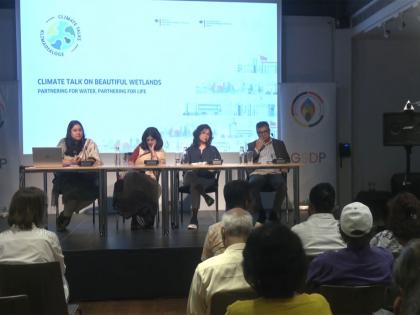
Kolkata (West Bengal) [India], April 17 : A high - level panel discussion on "Beautiful Wetlands: Partnering for Water, Partnering for Life" was held at Goethe-Institut, Kolkata. The event brought together experts from the government, the private sector, and civil society to discuss the ecological, cultural, and economic importance of wetlands and the urgent need for collaborative conservation efforts.
In her opening remarks, Barbara Voss, Consul General, German Consulate General in Kolkata, said, "Wetlands are not only rich in biodiversity but essential for climate resilience and sustainable livelihoods. Through the Indo-German Green and Sustainable Development Partnership (GSDP), we are proud to work together with India in advancing collaborative, inclusive and nature-based approaches for climate action and biodiversity conservation."
Wetlands across India, from the Himalayas to coastal mangroves, are vital ecosystems that support biodiversity, livelihoods and cultural heritage. An estimated 6 per cent of the population of India depends upon wetlands for livelihood. They act as natural carbon sinks, contribute to water and food security, and protect against extreme events such as floods and storm surges. With deep socio-economic linkages, wetlands continue to play a critical role in sustaining millions of people, including Indigenous Peoples and Local Communities(IPLCs).
The panellists highlighted the importance of wetlands as 'hidden infrastructure' that underpin water security, raw materials and risk reduction. In regions like West Bengal, wetlands such as the East Kolkata Wetlands demonstrate nature-based solutions for wastewater treatment while supporting fisheries, agriculture and local economies. Today, East Kolkata Wetlands (EKW) are a designated Ramsar site and a critical natural sewage treatment system for Kolkata. Similarly, the Sundarbans were noted for their role as ecological buffers and livelihood providers.
Panellists discussed the need to mobilise finance at scale through stronger public and private sector engagement. Innovative instruments such as blended finance, green sukuk, water bonds, biodiversity and carbon credits were highlighted as pathways to unlock investment in climate-resilient solutions. The role of businesses in securing sustainable value chains and reducing operational risks through wetland conservation was also emphasised.
Developing countries require between USD 2 and 4 trillion each year to prevent the most severe impacts of climate change. Meeting this need requires mobilising private capital at scale. Currently, the private sector manages over USD 210 trillion in assets, yet only a small fraction is directed toward climate-related investments. This presents both a gap and a tremendous opportunity. With the increasing adoption of targeted policies and incentives by governments to drive climate action and green growth, the private sector now has a unique and timely opportunity.
The session acknowledged key Indian government initiatives, including Mission Sahbhagita, Mission LiFE, and the Save Wetlands Campaign, which promote community-led conservation and sustainable lifestyles. India's recognition of 98 wetlands as Ramsar Sites and the Amrit Dharohar Initiative further demonstrate the country's strong commitment to wetland conservation and its broader climate goals.
Closing remarks were delivered by Taina Dyckhoff, Counsellor for Climate and Environment, German Embassy, New Delhi. She said, "The conversation today reaffirms the role of partnerships in addressing climate and biodiversity challenges. Through instruments such as the International Climate Initiative (IKI), Germany remains committed to partnering with India to promote sustainable and climate-resilient development."
The session concluded with a call for strengthened partnerships across government, private sector and communities to ensure the wise use and long-term sustainability of wetlands.
Disclaimer: This post has been auto-published from an agency feed without any modifications to the text and has not been reviewed by an editor
Open in app