
Akshaya Tritiya 2026: Why Worshipping the Kitchen Stove and Goddess Annapurna Is Important
By Lokmat Times Desk | Updated: April 14, 2026 11:09 IST2026-04-14T11:09:01+5:302026-04-14T11:09:44+5:30



Akshaya Tritiya, which falls on April 19 this year, is regarded as one of the most auspicious days in ...
Akshaya Tritiya 2026: Why Worshipping the Kitchen Stove and Goddess Annapurna Is Important
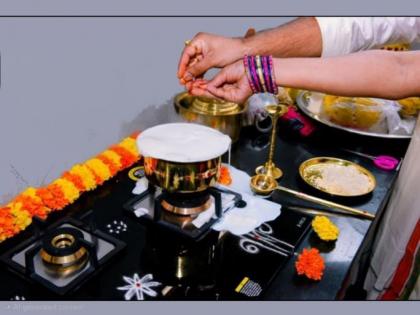
Akshaya Tritiya, which falls on April 19 this year, is regarded as one of the most auspicious days in the Hindu calendar. Alongside the tradition of purchasing gold, the day holds deep spiritual importance for acts of charity and donation. Devotees worship Goddess Lakshmi and Lord Vishnu, seeking prosperity and well-being. The occasion also marks the ceremonial farewell of Goddess Annapurna, who, during the month of Chaitra, is believed to visit her maternal home in the form of Chaitragaur before returning to her marital abode. As part of her worship, reverence is also offered to the kitchen stove, symbolising nourishment and sustenance.
Traditionally, women in earlier generations would meticulously clean the kitchen each night and begin the day by offering turmeric and kumkum to the stove, decorating the space with rangoli before starting their daily cooking. However, with the demands of modern life, such practices are often overlooked. Festivals like Akshaya Tritiya thus serve as meaningful reminders to reconnect with and preserve these time-honoured customs.
Why perform this puja?
Worshipping the stove is, in essence, worshipping Goddess Annapurna. She ensures that we never experience a scarcity of food or grain. It is also a worship of the Fire God (Agni), through whose grace we are able to savor the taste of delicious meals. Therefore, one should clean the stove thoroughly, draw rangoli around it, offer turmeric and vermilion, and recite the Annapurna Stotra. If one does not know the Stotra by heart, one should make a point to recite the following verse dedicated to the Goddess:
Just as we are protected from starvation through the grace of Goddess Annapurna, if we extend help to the best of our ability—to those in need, the blessings of Annapurna will forever remain upon us. There is no act of merit (Punya) greater than offering water to the thirsty and food to the hungry. Even if we may not be wealthy, if we demonstrate the magnanimity to share a morsel from our own plate or to help procure a meal for others then there is absolutely no doubt that our joy, prosperity, and abundance will remain inexhaustible!
Open in app