
Book Review: Kailash – Param Chetna ka Urja Kendra by Dr. Archika Didi
By Impact Desk | Updated: April 18, 2026 19:15 IST2026-04-18T19:11:12+5:302026-04-18T19:15:15+5:30



There are books that describe journeys, and then there are books that become journeys. Kailash – Param Chetna ka ...
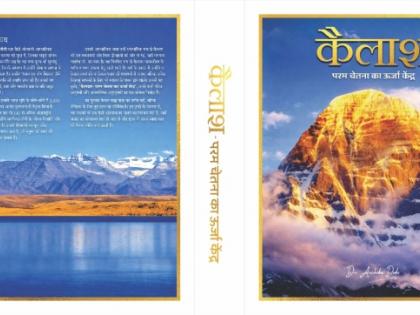
Book Review: Kailash – Param Chetna ka Urja Kendra by Dr. Archika Didi
There are books that describe journeys, and then there are books that become journeys. Kailash – Param Chetna ka Urja Kendra belongs firmly to the latter. From its deeply evocative opening, it is evident that this is not a conventional travel narrative, but a meditative passage into the sacred—both geographical and profoundly personal.
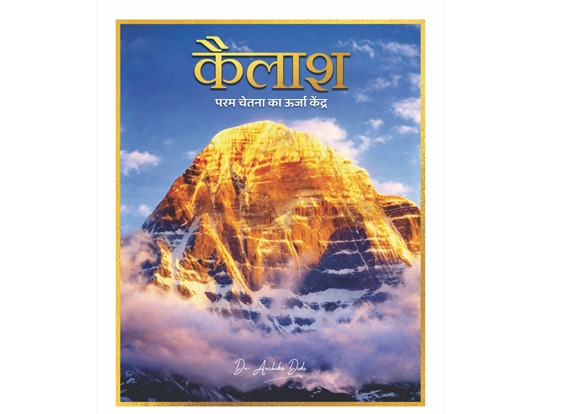
At the heart of the narrative stands Mount Kailash, a peak that has, for centuries, transcended physical definition to become a symbol of cosmic stillness. The author does not attempt to “explain” Kailash in the traditional sense. Instead, she invites the reader to experience it—as presence, as silence, as an axis around which both the world and the inner self seem to revolve.
What distinguishes this work is its dual-layered narrative. On one level, it traces the physical pilgrimage across the stark and majestic Tibetan plateau—the gruelling ascent, the biting winds, and the revered kora, the 52-kilometre circumambulation that has drawn seekers for millennia. On another, deeper level, it unfolds as an inward journey—one that gently dissolves ego, identity, and illusion. The terrain here is not just external, but deeply psychological and spiritual.
The inclusion of Lake Mansarovar adds a luminous, almost ethereal dimension to the narrative. Portrayed as both mirror and purifier, the lake becomes symbolic of the mind itself—capable of reflecting truth in stillness and distorting it in restlessness. These reflections are among the most poetic and contemplative passages in the book.
A particularly compelling aspect of the work is its seamless interweaving of multiple spiritual traditions. Kailash is not confined to a single belief system but is presented as a shared spiritual epicentre—revered in Hinduism as the abode of Lord Shiva, in Buddhism as the seat of Demchok, in Jainism as Ashtapada, and in the ancient Bön tradition as the cosmic centre. This pluralistic lens lends the narrative both universality and depth, making it resonate across diverse spiritual perspectives.
Stylistically, the prose is lyrical and immersive. Dr. Archika Didi writes with the sensitivity of a poet and the insight of a seasoned spiritual guide. Her voice carries a quiet authority—never instructive, yet deeply guiding. The recurring emphasis on humility—that Kailash cannot be conquered, only revered—offers a powerful counterpoint to modern travel narratives often rooted in achievement and conquest.
Importantly, the book does not shy away from the physical and emotional rigours of the pilgrimage. Altitude sickness, exhaustion, and moments of doubt are portrayed with honesty, grounding the narrative in lived reality. Yet, these challenges are not obstacles, but essential elements of transformation—reminding the reader that endurance and grace often walk hand in hand.
Another refreshing dimension is the feminine lens through which the journey unfolds. In a genre frequently dominated by outward exploration and conquest-driven narratives, this work offers an inward gaze—one that values surrender, intuition, and emotional depth as pathways to spiritual awakening.
The author’s commitment to authenticity is evident in her thoughtful integration of research, drawing from scriptures, historical accounts, and even geological perspectives. This layered approach ensures that the narrative is not only experiential but also intellectually and spiritually grounded.
About the Author
Dr. Archika Didi is a renowned Meditation & Spiritual Visionary and the Vice Chairperson of Vishwa Jagriti Mission. Having over 88 mandals and 34 ashrams and temples across India, she has been extensively working on meditation and spirituality as integrated part of life!
With a PhD in Meditation and Yogic Science, she is the creator of the widely appreciated Blissful Living Meditation Program.
She has delivered impactful talks at prestigious platforms such as the Art Institute of Chicago, White House Canada, Vigyan Bhawan, and Bharat Mandapam — inspiring people across the world to reconnect with their inner peace.
Her approach beautifully blends ancient spiritual wisdom with modern psychology, making meditation simple, practical, and deeply effective in everyday life.
With over 2000+ meditation camps across India and 500+ international sessions, she has transformed thousands of lives globally through her teachings.
Open in app
