
World Meditation Day: Why the Modern Body Needs Water Meditation More Than Ever
By Impact Desk | Updated: December 20, 2025 16:38 IST2025-12-20T16:36:33+5:302025-12-20T16:38:56+5:30



World Meditation Day invites humanity to pause and reflect on the relationship between awareness and wellbeing. In a time ...
World Meditation Day: Why the Modern Body Needs Water Meditation More Than Ever
World Meditation Day invites humanity to pause and reflect on the relationship between awareness and wellbeing. In a time marked by constant stimulation, rising stress levels, irregular lifestyles, and physiological imbalance, meditation emerges as a stabilising force. Ancient meditation systems were never detached from life; they were designed to respond to the conditions of the time. Today, the human body and mind face challenges rooted in excess heat, pressure, and overstimulation — and meditation evolves to address these realities.
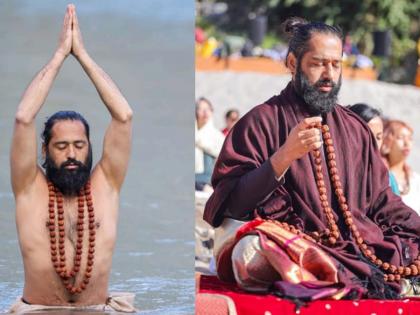
Himalayan Siddhaa Akshar Ji presents meditation as a practical science that works directly on the human system. It refines perception, regulates energy, and restores internal balance. Across the Himalayan tradition, a wide range of meditation techniques exist, each serving a specific purpose. These include State Meditation (Sthithi Dhyan), Seed Meditation (Aarambh Dhyan), Superpower Meditation (Divya Shakti Dhyan), Ardha Jal Magna Dhyan (half-immersion water meditation), Tratak Dhyan (third-eye meditation), and Trikon Dhyan (triangle meditation).
Among these, Ardha Jal Magna Dhyan holds exceptional relevance in the present era, where heat-related imbalances dominate both physical and mental health patterns.
The Modern Problem: Excess Heat and Systemic Imbalance
Modern lifestyles generate continuous internal heat — physical, emotional, and psychological. Irregular food habits, prolonged screen exposure, constant mental engagement, suppressed emotions, and reduced contact with natural elements elevate internal temperature within the body.
This excess heat expresses itself in multiple ways:
● Hormonal disturbances such as PCOS and fertility-related challenges
● Digestive irregularities, acidity, and metabolic imbalance
● Weight gain and obesity driven by unstable metabolic fire
● Emotional volatility, irritation, restlessness, and mental fatigue
● Cardiovascular stress influenced by pressure, inflammation, and overload
When heat remains unregulated, the body loses its natural rhythm. The nervous system stays overactive, digestion becomes erratic, and emotional balance weakens. Over time, these imbalances influence long-term health and vitality.
This is where water-based meditation becomes essential — not symbolically, but physiologically and energetically.
Ardha Jal Magna Dhyan: Meditation in Flowing Water
Ardha Jal Magna Dhyan is the practice of meditating while the body is partially immersed — up to the chest — in flowing water such as a river, stream, or the natural movement of the ocean. Flowing water continuously absorbs excess heat from the body and supports natural thermal regulation. Still water does not offer the same effect.
In Himalayan understanding, water in motion carries dynamic memory and energetic movement. When the human body enters flowing water with awareness, the system responds immediately. Breath deepens, muscle tension releases, and the nervous system shifts toward stability.
Himalayan Siddhaa Akshar Ji explains:
“Water carries life, rhythm, and memory. When human awareness aligns with water, the system naturally moves into harmony.”
Impact on the Physical Body
Ardha Jal Magna Dhyan works directly on heat regulation, which lies at the root of many modern health challenges. Partial immersion cools the abdominal region, stabilises metabolic activity, and supports hormonal balance. This cooling effect plays a significant role in conditions influenced by internal heat, including menstrual irregularities, PCOS, fertility challenges, and digestive disturbances.
As metabolic heat stabilises, digestion improves, absorption becomes efficient, and fat accumulation begins to regulate naturally. The cardiovascular system experiences reduced strain as the body moves out of chronic overdrive. Regular practice supports weight balance, steadier circulation, and overall physical resilience.
Impact on the Mind
As physical heat reduces, mental agitation softens. The mind settles into clarity without effort. Thoughts slow down, emotional sharpness eases, and focus becomes stable. Flowing water anchors awareness in the present moment, supporting a calm yet alert mental state. Stress responses reduce, and emotional balance strengthens.
Impact on Consciousness
At the level of consciousness, Ardha Jal Magna Dhyan enhances receptivity. Flowing water sharpens sensitivity and expands awareness. The practitioner experiences a sense of lightness, inner clarity, and connection. Awareness flows naturally, mirroring the movement of water, allowing deeper perception and introspection.
A Timely Solution for the Modern World
In an era dominated by excess heat, pressure, and stimulation, Ardha Jal Magna Dhyan offers a direct, natural solution. It complements other Himalayan practices such as Sthithi Dhyan for awareness, Divya Shakti Dhyan for energetic expansion, and Tratak Dhyan for focused perception.
On World Meditation Day, this practice stands as a reminder that meditation adapts to human needs while remaining rooted in ancient wisdom. Through flowing water, awareness cools, stabilises, and expands — restoring balance to body, mind, and consciousness.
Open in app