
Mumbai: Maharashtra Government Orders Marathi Test, Licence Check for Auto, Taxi Drivers in Mira-Bhayandar
By Lokmat Times Desk | Updated: April 7, 2026 11:00 IST2026-04-07T11:00:30+5:302026-04-07T11:00:30+5:30



Permits and domicile certificates of more than 12,000 registered auto-rickshaw and taxi drivers operating in Mira Road and Bhayandar ...
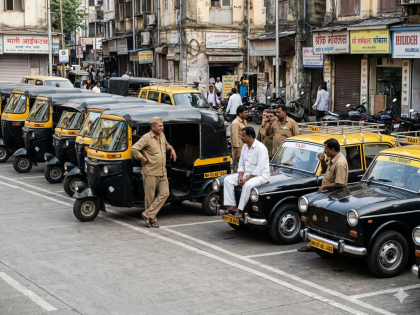
Mumbai: Maharashtra Government Orders Marathi Test, Licence Check for Auto, Taxi Drivers in Mira-Bhayandar
Permits and domicile certificates of more than 12,000 registered auto-rickshaw and taxi drivers operating in Mira Road and Bhayandar are currently under detailed verification by the Regional Transport Office (RTO). Authorities are examining these documents in phases to confirm their authenticity and eliminate irregularities. As part of the process, drivers are also required to undergo a Marathi language test to demonstrate their ability to read, write, and speak the language fluently. This additional measure aims to ensure compliance with existing rules and improve communication standards between drivers and passengers in the region, reported Hindustan Times.
On Monday, Transport Minister Pratap Sarnaik stated that the action followed a complaint by BJP MLA Narendra Mehta from Mira-Bhayandar, who raised concerns with Chief Minister Devendra Fadnavis regarding widespread irregularities in the issuance of licences, badges, and permits. Mehta alleged that these approvals were being distributed rapidly to newly arrived migrants without proper scrutiny, the report added. Across Mumbai and its suburbs, there are approximately 2.8 lakh autorickshaw permit holders and 20,000 taxi permit holders, collectively employing nearly five lakh drivers working in shifts, and four lakh across the Mumbai Metropolitan Region.
The verification campaign in Mira Road and Bhayandar is scheduled to continue until May 1, celebrated as Maharashtra Day, by which time the RTO is expected to submit a comprehensive report. This initiative is being treated as a pilot project, and its findings are likely to influence similar verification drives across Maharashtra. The exercise involves checking domicile certificates, which require a minimum of 15 years of residency in the state, along with assessing drivers’ proficiency in spoken and written Marathi. Drivers who fail to meet either requirement may face suspension of their permits and licences.
At RTO offices, drivers are being asked to write short passages in Marathi as part of the test. This requirement stems from Rule 24 of the Maharashtra Motor Vehicles Rules, 1989, which was strengthened through an amendment in November 2019 to make compliance stricter. Earlier, drivers could submit a certificate from a Marathi language expert, but the revised rule mandates direct demonstration of language skills. Sarnaik reiterated that the initiative was launched following Mehta’s complaint and added that once the report is submitted on Maharashtra Day, similar checks will be extended across the state, the report added.
Officials from the transport department indicated that the complaint highlights a disturbing trend, where migrants were allegedly obtaining badges shortly after arriving in Maharashtra, bypassing the mandatory 15-year domicile condition. In certain instances, authorities reportedly found that 25 to 30 permits were issued using the same residential address, raising serious concerns. Many of these permit holders were said to be in their early twenties and had recently migrated from other states, further intensifying suspicions of procedural lapses and misuse of the system.
Also Read: Mumbai Metro Timetable Updated Ahead of Lines 9 & 2B Rollout; Check Timings and New Schedule Here
The government’s sudden move reportedly caught local authorities unprepared. Regulations clearly state that multiple applicants should not share identical addresses on domicile certificates, yet enforcement has been weak. When questioned, local transport officials often redirected responsibility to other departments such as tehsildars and rationing offices, creating confusion and delaying action. According to officials, the introduction of the Marathi language test is intended to address this issue by allowing authorities to take immediate decisions without depending on inter-departmental verification processes.
There have also been previous complaints about disputes between passengers and drivers due to communication barriers, especially when drivers are not fluent in the local language. Authorities believe that ensuring Marathi proficiency could help reduce such incidents and improve the overall commuting experience. However, the move has drawn criticism from auto and taxi unions, many of whose members come from northern states and may find it challenging to meet the new requirements.
Union representatives have expressed concern over the implementation of the language test. Auto and taxi union leader Thampi Kurien pointed out that existing rules already require drivers to have knowledge of the local language and that RTO officials typically assess this through interactive questioning. Meanwhile, Autorickshaw Driver Association president Shashank Rao opposed the move, stating that only basic Marathi is necessary for communication with passengers. While supporting action against forged documents, he warned that enforcing strict language requirements could lead to harassment and increase the scope for corrupt practices.
Open in app