
Mumbai Metro Line 3 to Get Tokyo-Style Underground Walkways, Boosting Connectivity in BKC and Worli
By Lokmat Times Desk | Updated: March 30, 2026 10:38 IST2026-03-30T10:38:36+5:302026-03-30T10:38:36+5:30



Plans are underway to expand pedestrian connectivity from the Mumbai Metro Line 3 Aqua Line through an underground walkway ...
Mumbai Metro Line 3 to Get Tokyo-Style Underground Walkways, Boosting Connectivity in BKC and Worli
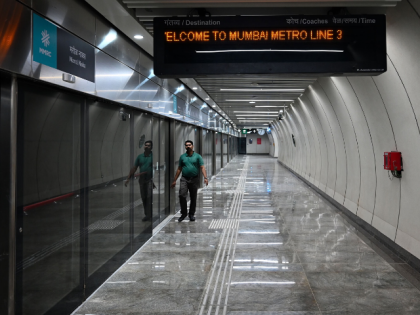
Plans are underway to expand pedestrian connectivity from the Mumbai Metro Line 3 Aqua Line through an underground walkway network linking key commercial and public spaces across Mumbai, reported Mid Day. These proposed tunnels will connect Metro stations to major destinations, including the Bandra Kurla Complex, the Nehru Planetarium, and the Worli seafront promenade. Authorities have initiated the process of appointing design and project management consultants to execute the plan, the report added. The underground corridors, including vestibules linking the Science Centre and BKC stations to nearby buildings, are expected to collectively span nearly three kilometres, significantly improving last-mile access and commuter convenience in the city.
Programme director of the Walking Project, Vedant Mhatre, emphasised that such subways should evolve beyond simple transit corridors. He told Mid Day, “Pedestrian subways are welcome, but they should be much more than just corridors connecting two points. We need to take cues from cities like Tokyo. At Shinjuku Station, commuters can walk through vast underground networks filled with retail outlets, grocery stores, and restaurants. These are not just passageways but vibrant public spaces. If even a portion of that model is adopted in Mumbai, it could increase Metro usage, create opportunities for retail activities such as street vending, and generate additional revenue beyond fares.”
Highlighting broader possibilities, Mhatre further told Mid Day that well-planned underground corridors could integrate hawker markets developed in collaboration with the Brihanmumbai Municipal Corporation. He noted that such infrastructure could improve safety and usability even during late hours while supporting livelihoods. He also suggested that these tunnels could bridge connectivity gaps, such as linking Dadar Metro station with the suburban railway station via underground routes extending into the surrounding areas.
Meanwhile, senior transport expert AV Shenoy told Mid Day that usability would depend on walking distance, stating that commuters may avoid tunnels longer than 250 metres due to discomfort, fear, or safety concerns, and emphasised the need for emergency evacuation systems, escalators, lifts, lighting, ventilation, and security.
Architect Jagdeep Desai told Mid Day that if maintained properly with cleanliness, lighting, ventilation, and security personnel, these tunnels could be safer than road crossings or foot overbridges. Echoing cautious optimism, Jitendra Gupta told Mid Day that any infrastructure improvement should be welcomed, especially given the current poor pedestrian conditions, but stressed that such projects will succeed only if they offer clear time-saving benefits. Alongside these developments, authorities are also introducing Transit-Oriented Development norms around Metro stations to manage increased footfall and enhance urban planning.
Under the Transit-Oriented Development framework, developers will be permitted to utilise additional Floor Space Index of up to 100 per cent by paying a premium linked to half of the ready reckoner rate. Builders will be required to construct underground pedestrian links connecting their properties directly to Metro entry points at their own expense. The government has enforced strict compliance measures, making it mandatory to complete these connections before granting occupation certificates. Regarding the proposed walkways, two tunnels are planned from the Science Centre station—one extending about 1.1 kilometres towards the Worli promenade via the Mahalaxmi Racecourse, and another shorter 500-metre link to the Nehru Planetarium.
From the BKC Metro station, an underground corridor of approximately 1.4 kilometres is proposed to connect with the upcoming high-speed rail terminal near Diamond Bourse. The Mumbai Metro Rail Corporation Limited has already prepared a detailed project report for these direct underground access links and station vestibules connecting surrounding properties. The total length of pedestrian tunnels branching from the Science Centre station alone is estimated to be around 1,600 metres. These developments aim to transform commuter experience by creating seamless, safe, and efficient pedestrian infrastructure integrated with the city’s expanding Metro network.
Open in app