
Centre doubles down on enhancing safety in flying training institutes
By IANS | Updated: April 24, 2026 17:05 IST2026-04-24T17:02:26+5:302026-04-24T17:05:10+5:30



New Delhi, April 24 The government has released the second phase of DGCA-approved Flying Training Organisation (FTO) rankings ...
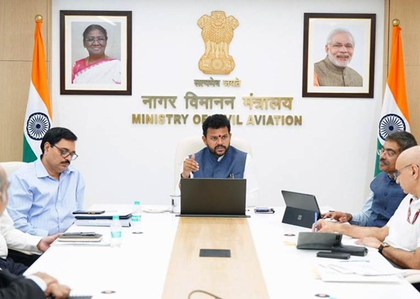
Centre doubles down on enhancing safety in flying training institutes
New Delhi, April 24 The government has released the second phase of DGCA-approved Flying Training Organisation (FTO) rankings for April 2026, showing an overall improvement in training standards with one institute making it to the top 'A' category, said the Ministry of Civil Aviation on Friday.
The ranking framework, developed under the guidance of Civil Aviation Minister Ram Mohan Naidu, aims to bring transparency, accountability and enhanced safety standards across flying training institutes in the country.
The government said that Avyanna Aviation Pvt Ltd emerged as the only FTO to achieve category 'A', a significant improvement from the previous phase when no institute qualified for the top slot.
Moreover, the number of FTOs in category 'B' has increased, while those in Category 'C' have reduced which has indicated a broader upgrade in performance standards.
According to the ministry, the data-driven ranking system introduced by the Directorate General of Civil Aviation (DGCA) enables objective comparison and continuous monitoring of FTOs, strengthening the overall pilot training ecosystem.
"My core objective in introducing an FTO ranking system is to make pilot training more transparent and flying a more attractive career option for youth," the aviation minister said.
Naidu added that the initiative was shaped by interactions with aspiring cadets and their families to help them make informed decisions.
Highlighting sectoral growth, the minister said India’s aviation landscape is set for major expansion over the next five years, with 50 new airports, induction of around 500 aircraft by Indian carriers and development of airports into transit hubs under the hub-and-spoke model.
"With a projected requirement of nearly 30,000 additional pilots over the next decade, there is a significant opportunity for Indian youth in aviation," according to the minister.
The government noted that since the introduction of the ranking system, training flying hours have increased from 32 per cent to 50 per cent, alongside expansion of aircraft fleets and improved efficiency in completing Commercial Pilot Licence (CPL) requirements.
The minister said the broader objective is to enhance global competitiveness of Indian FTOs while promoting self-reliance through the 'Train in India, Fly in India' vision.
In addition, the number of CPLs issued increased by more than 2.5 times over the past eight years, with record numbers in 2024 and 2025.
In the last 18 months, six new FTOs have been permitted, with six more in the pipeline, according to him.
Among other notable developments, Indira Gandhi Rashtriya Uran Akademi showed significant improvement in rankings, while several FTOs demonstrated progress in operational efficiency, safety compliance and training outcomes.
Notably, the first phase of the rankings was published on October 1, 2025.
Disclaimer: This post has been auto-published from an agency feed without any modifications to the text and has not been reviewed by an editor
Open in app