
Conservation efforts meet economic concern: Annual 61-day fishing ban begins on East Coast
By ANI | Updated: April 15, 2026 16:35 IST2026-04-15T22:04:58+5:302026-04-15T16:35:03+5:30



Visakhapatnam (Andhra Pradesh) [India], April 15 : The central government has officially enforced a 61-day fishing ban across India's ...
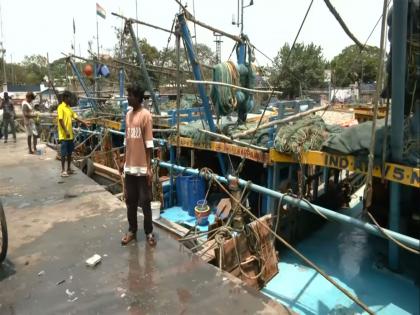
Conservation efforts meet economic concern: Annual 61-day fishing ban begins on East Coast
Visakhapatnam (Andhra Pradesh) [India], April 15 : The central government has officially enforced a 61-day fishing ban across India's eastern territorial waters, effective from April 15 to June 14.
The move, aimed at conserving marine life and allowing fish stocks to replenish during the peak breeding season, has sparked a mix of administrative support and grassroots demands for increased financial aid.
The ban affects thousands of fishermen across the coastal states of West Bengal, Odisha, Andhra Pradesh, and Tamil Nadu.
To mitigate the loss of income during these two months, the Andhra Pradesh government has pledged financial assistance to those affected.
Eligible fishermen (lascars) are set to receive ₹20,000 each under the Fishermen's Insurance scheme this May through Direct Cash Transfer. This annual tradition has evolved over the last 15 years, moving from the distribution of rice to direct cash deposits to provide more flexibility for families.
PC Appa Rao, President of the Andhra Pradesh Mechanised Fishing Boat Operators Association, confirmed the rollout, noting that the funds are intended to bridge the gap while the conservation period is implemented.
"The government is going to implement a conservation period starting on the 15th of this month. During this two-month ban period, the government is going to provide ₹20,000 to each lascar for their livelihood," said PC Appa Rao.
Despite the government's efforts, some industry leaders argue that the compensation falls short of the economic reality faced by coastal communities. Janaki Ram Vasupalli, President of the East Coast Mechanised Fishing Boats Association, expressed strong opposition to the current aid structure.
"The Government of India imposed a fishing ban period across the coastal states in the East Coast area, especially West Bengal, Odisha, Andhra Pradesh, and Tamil Nadu. So, lakhs of people have lost their livelihood during this ban period. This ban period today onwards, the date today means from April 14th midnight to June 15th. This is the ban period, 61 days. So, this time, fishermen lost their livelihood. They, so Government of Andhra Pradesh gave financial assistance of 20,000 rupees to each traditional fisherman. This is not enough for fishermen. So, we request the Government of Andhra Pradesh to give financial assistance to fisher women and the youngsters who are the sustainers in the fishing industry. So, the government has to consider this sector, said Vasupalli.
Beyond immediate aid, industry advocates are looking toward New Delhi for long-term policy changes. Vasupalli urged Finance Minister Nirmala Sitharaman to address Exclusive Economic Zone (EEZ) regulations in the national budget.
Advocates argue that the East Coast is a prime fishing ground, particularly for tuna. The association has called for specific fund allocations to ensure that EEZ norms are implemented effectively, ensuring that Indian fishermen can maximise the potential of deep-sea resources once the ban is lifted.
"We are not taking any information from the government side for one-day fishing. This is the strictly imposed fishing ban from tonight onwards to June 15th. So, EEZ (Exclusive Economic Zone) norms, it is very viable for the Government of India to decide on the recent budget. Finance Minister Nirmala Sitharaman has to raise this issue and provide the necessary assistance for the EEZ norms to be implemented. This is a very good decision for the Government of India. It is a very viable decision, especially since our East Coast is the fishing grounds, tuna catch is very high," added Vasupalli.
While the ban remains strictly enforced to ensure the ecological health of the Bay of Bengal, the debate over the "human cost" of conservation continues to intensify as families prepare for two months of restricted activity.
Disclaimer: This post has been auto-published from an agency feed without any modifications to the text and has not been reviewed by an editor
Open in app